This guide will walk you through exactly what a mitre saw is, how it works, the different types available, and how it compares to other common saws.
What is a Mitre Saw?
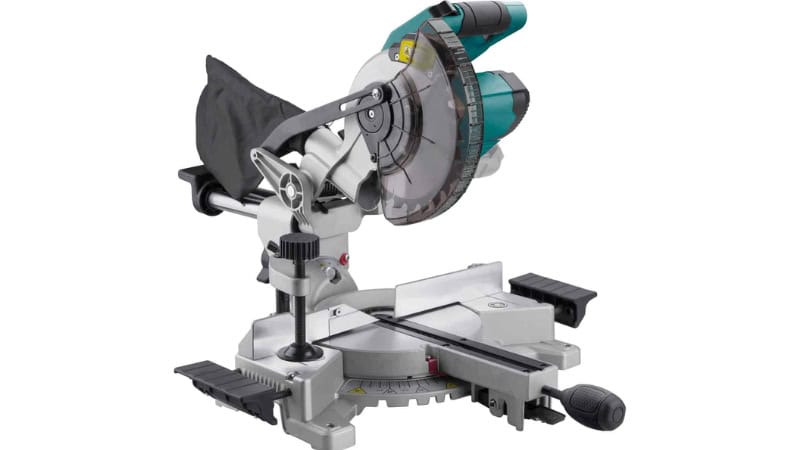
A mitre saw is a specialized power tool designed specifically to make accurate crosscuts and angled cuts in pieces of wood. It consists of a motorized circular saw blade mounted on a hinged, spring-loaded arm that can be brought down onto a stationary workpiece. Unlike a standard hand saw or a circular saw that you push across the material, a mitre saw remains stationary while you pull the blade down into the wood.
How Does It Work?
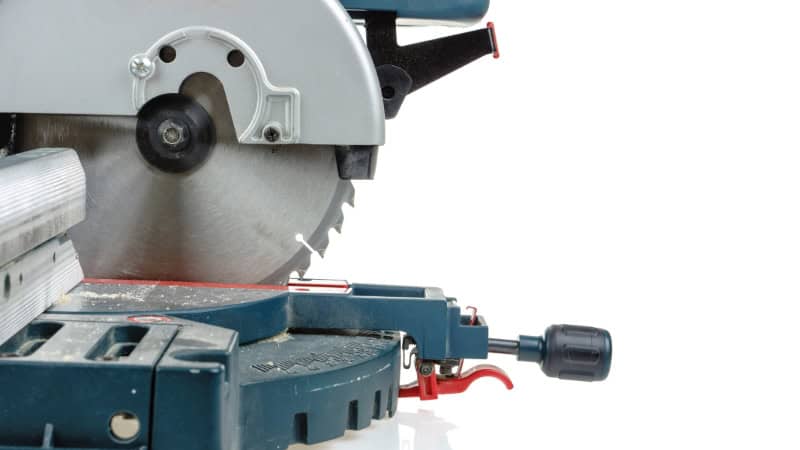
The Simple Explanation: You place a piece of wood flat on the tool’s base, push it securely against the back edge, and pull a spinning blade down through the wood to cut it.
The Detailed Explanation: Operating a mitre saw involves several key components working together to ensure a clean, accurate cut. The machine features a heavy, flat base called a table and a vertical backstop known as a fence. You place your material flat on the table and press it firmly against the fence so it cannot move during the cut.
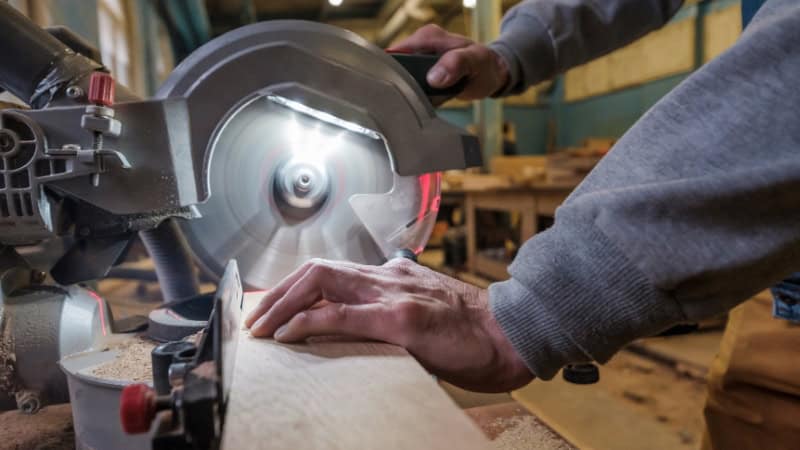
The motorized blade sits on an articulating arm. By releasing a locking mechanism, the user can pivot the entire arm assembly left or right to set a specific cutting angle, known as the miter angle. Most saws feature a miter scale with pre-set detents at common angles like 15, 22.5, 30, and 45 degrees. Once the angle is locked in, you squeeze the trigger to start the motor, wait for the blade to reach full speed, and smoothly plunge the blade down through the material. A retractable blade guard automatically moves out of the way as the blade descends and covers the blade again as it is raised.
Benefits of Using a Mitre Saw
Investing in a mitre saw brings a multitude of advantages to your woodworking and home improvement projects. Here are the primary benefits:
- Exceptional Precision: Mitre saws eliminate the guesswork of cutting angles. The locked-in detents ensure that a 45-degree cut is exactly 45 degrees every single time.
- Speed and Efficiency: What might take several minutes of careful measuring and manual sawing takes merely seconds with a mitre saw. This drastically reduces the time required for projects involving repetitive cuts.
- High Repeatability: If you need to cut ten pieces of wood to the exact same length and angle, a mitre saw—often paired with a stop block—makes this incredibly easy.
- Cleaner Cuts: Because the blade is stabilized by the heavy arm and plunges directly into the wood at a high RPM, it produces significantly cleaner, smoother edges than handheld saws.
- User-Friendly Operation: Despite their intimidating appearance, mitre saws are remarkably easy to learn. The stationary nature of the material makes it one of the safer power saws for beginners to master.
Different Types of Mitre Saws
Here are the four main types you will encounter:
- Standard Mitre Saw: The most basic model. The blade swings left and right to make angled cuts, but it only cuts straight down vertically. It cannot tilt sideways.
- Compound Mitre Saw: This saw can pivot left and right for miter cuts, but the blade can also tilt sideways (usually in one direction, typically to the left). This allows you to make bevel cuts. When you combine a miter cut and a bevel cut simultaneously, it is called a compound cut.
- Dual Compound Mitre Saw: Functionally similar to a compound saw, but the blade can tilt both to the left and to the right. This saves you from having to flip your heavy workpiece around when cutting complex angles like crown molding.
- Sliding Compound Mitre Saw: The most versatile option on the market. In addition to pivoting and tilting, the entire motor and blade assembly sits on sliding rails. This allows you to pull the blade forward, plunge it down, and push it back through the wood, significantly increasing the maximum width of the board you can cut.
Common Uses for a Mitre Saw
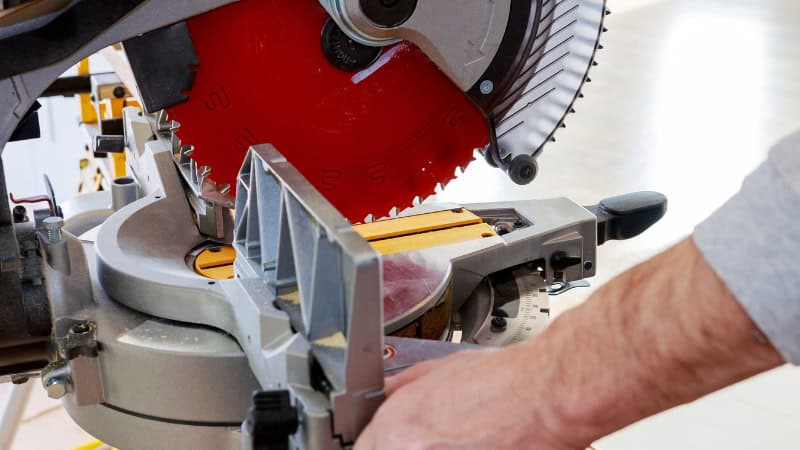
The mitre saw excels in a variety of specific applications:
- Trim and Molding: Installing baseboards, window casings, door frames, and intricate crown molding requires precise angled cuts that only a mitre saw can reliably deliver.
- Flooring Installation: Whether you are laying down laminate, engineered hardwood, or luxury vinyl plank, a mitre saw is essential for quickly cutting planks to the correct length at the ends of your room.
- Framing and Decking: When building walls, sheds, or outdoor decks, carpenters use mitre saws to rapidly crosscut 2×4s and decking boards to the required dimensions.
- Furniture and Crafting: Building picture frames, small boxes, or custom furniture pieces requires tight, perfect joints, making the mitre saw a necessity for serious crafters.
Chop Saw vs Mitre Saw vs Table Saw
It is easy to confuse different types of power saws, especially since they sometimes look similar. Understanding the distinct purpose of each tool will help you choose the right one for your specific task.
|
Feature
|
Mitre Saw
|
Chop Saw
|
Table Saw
|
|---|---|---|---|
|
Primary Material
|
Wood, plastics, light aluminum
|
Heavy metals (steel pipes, rebar)
|
Wood, sheet goods (plywood)
|
|
Main Function
|
Angled crosscuts, bevels, compound cuts
|
Straight 90-degree downward cuts
|
Ripping long boards lengthwise
|
|
Blade Type
|
Toothed steel or carbide-tipped blade
|
Toothless abrasive disc (usually)
|
Toothed steel or carbide-tipped blade
|
|
Movement
|
Blade plunges down (and sometimes slides)
|
Blade plunges straight down
|
Wood is pushed into a stationary spinning blade
|
|
Precision
|
Extremely high precision for joints
|
Low precision, rough cuts
|
High precision for straight, long cuts
|
As you can see, a chop saw is a brute-force tool primarily used by metalworkers and plumbers, while a table saw is the centerpiece of a woodshop used for cutting large panels and ripping long boards down to size. The mitre saw lives specifically in the realm of angled crosscuts.