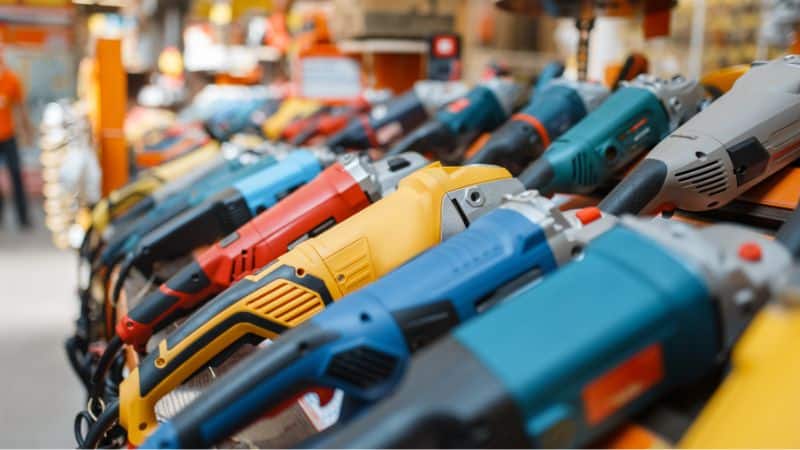
Walking into a workshop or hardware store can be overwhelming when you’re faced with multiple tools that seem similar but carry vastly different price tags and specifications. If you’ve ever found yourself staring at a die grinder and angle grinder wondering which one belongs in your toolbox, you’re not alone.
While both tools contain “grinder” in their name and involve rotary motion, they serve fundamentally different purposes that can make or break your project—and potentially create safety hazards if used incorrectly.
This comprehensive guide will walk you through all aspects of these two tools – including how they work, their key features, and practical applications. A detailed comparison will be provided to address all your questions. By the end, you’ll have the knowledge to make an informed decision that matches your specific needs and budget.
Key Differences at a Glance
Before diving into the specifics, this comparison table provides a quick overview of how die grinders and angle grinders differ:
| Feature | Die Grinder | Angle Grinder |
|---|---|---|
| Primary Function | Precision work, detailing, polishing | Cutting, heavy grinding, material removal |
| Power & Speed | High RPM (20,000-30,000+), Low Torque | Lower RPM (5,000-12,000), Very High Torque |
| Tool Chuck/Attachment | 1/4″ or 1/8″ Collet (for small bits) | 5/8″-11 Thread (for large discs/wheels) |
| Common Accessories | Rotary burrs, small grinding stones, sanding drums | Cutting wheels, grinding discs, flap discs |
| Best For | Metalworking, automotive porting, wood carving | Construction, metal fabrication, welding |
| Typical Cost | $50-$200 (pneumatic), $80-$300 (electric) | $50-$250 (corded), $100-$400 (cordless) |
What is a Die Grinder?
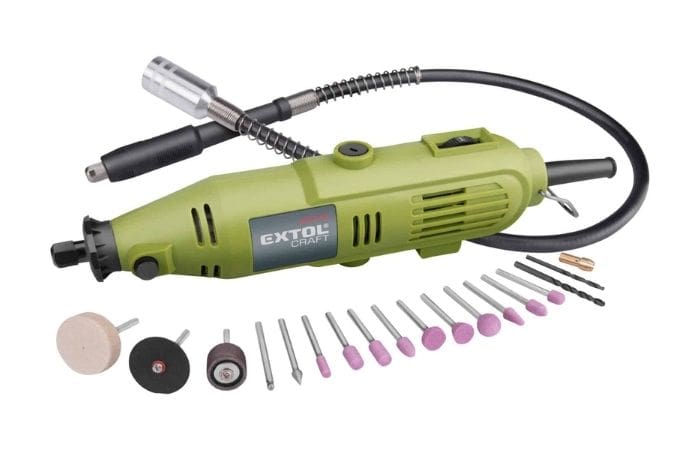
A die grinder is a high-speed rotary tool designed for precision work, offering exceptional control for detailed tasks that require finesse rather than brute force. The die grinder gets its name from its original purpose—finishing and modifying metal dies used in manufacturing. Today, its applications have expanded far beyond this initial use case.
How It Works & Key Features
Die grinders operate on a simple principle: a motor spins a small cutting or grinding bit at extremely high speeds, typically ranging from 20,000 to 30,000 RPM. What sets die grinders apart is their combination of high rotational speed with relatively low torque. This ensures that if the bit encounters significant resistance, the tool will stall rather than kick back violently, providing an inherent safety advantage for detailed work.
The tool features a collet system that accepts bits with shank sizes of 1/8-inch or 1/4-inch. This specialized chuck mechanism provides a secure grip on small-diameter tools, ensuring they remain centered during operation—a critical requirement for precision work. Die grinders come in both pneumatic (air-powered) and electric variants, with each type having distinct advantages. Pneumatic models tend to be lighter and more powerful for their size but require a substantial air compressor. Electric models offer greater portability but are typically slightly heavier due to their built-in motor.
Common Applications
The die grinder excels in situations where precision and control outweigh the need for rapid material removal.
In automotive applications, die grinders are used for porting and polishing cylinder heads—a process that smooths intake and exhaust passages to improve airflow and engine efficiency.
Metal fabricators rely on die grinders for deburring, which involves removing sharp edges from cut metal pieces. This not only improves safety by eliminating sharp edges but also enhances the professional appearance of the finished product.
In industrial maintenance, die grinders prove invaluable for modifying components with minimal material removal, such as enlarging holes by fractions of a millimeter or creating precise chamfers on edges.
What is an Angle Grinder?
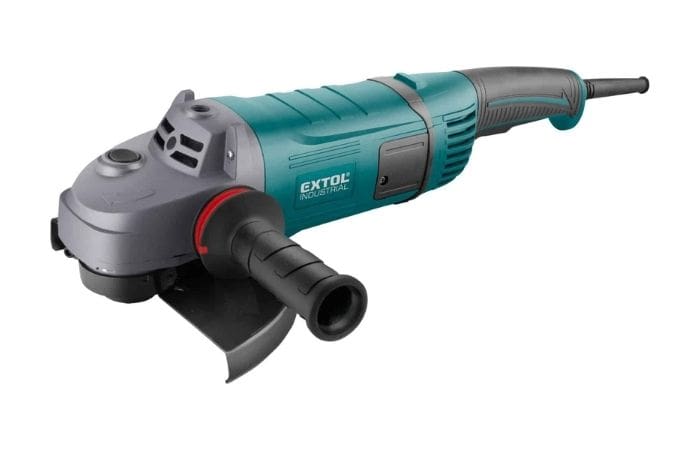
The angle grinder stands in stark contrast to the die grinder—it’s a handheld power tool designed for removing material in large quantities. Characterized by its distinctive horizontal motor orientation and perpendicular grinding head, the angle grinder earns its name from the 90-degree angle between the motor and grinding disc.
How It Works & Key Features
Angle grinders operate at significantly lower RPMs than die grinders—typically between 5,000 and 12,000 RPM—but generate substantially more torque. This high-torque design enables them to maintain rotational speed under heavy load, making them ideal for cutting through tough materials or grinding down substantial amounts of material quickly.
The angle grinder uses a threaded arbor system (most commonly 5/8-inch-11) to secure abrasive discs ranging from 4.5 inches to 9 inches in diameter. Like die grinders, angle grinders come in corded and cordless varieties. Corded models deliver consistent power for extended periods, making them ideal for prolonged cutting and grinding tasks. Cordless models offer greater portability but require powerful batteries to maintain performance comparable to their corded counterparts.
Common Applications
The angle grinder’s versatility makes it one of the most commonly used power tools on construction sites and in metal fabrication shops. Its primary application is cutting materials such as metal rebar, pipes, concrete pavers, and tiles.
In welding and metal fabrication, angle grinders are indispensable for preparing joints, removing welds, and smoothing surfaces. A flap disc mounted on an angle grinder can quickly create a smooth, finished surface on rough metal, while a grinding disc can remove significant amounts of material in seconds.
The angle grinder also serves well in demolition work, where it can quickly cut through nails, bolts, and other fasteners. With a wire brush attachment, it becomes an efficient tool for removing rust, paint, and scale from metal surfaces.
Despite its versatility, it’s important to remember that the angle grinder is fundamentally a powerful tool for aggressive material removal rather than precision work.
Die Grinder vs Angle Grinder: How to Choose
Power and Speed: Torque vs. RPM
The fundamental difference between die grinders and angle grinders lies in their power delivery. The high-RPM, low-torque combination of die grinders makes them ideal for precision work. Angle grinders, in contrast, use high torque at moderate speeds for tough jobs.
A useful analogy compares these tools to vehicles: a die grinder is like a sports car—built for speed and precision—while an angle grinder resembles a tractor—designed for power and ability to work under heavy load. Understanding this distinction will guide you toward the right tool for your specific application.
Choosing the Right Tool: Application Examples
The choice between angle grinders and die grinders becomes clear when we examine specific applications:
- Cutting metal stock or pipes: An angle grinder with a cutting disc is the appropriate choice.
- Deburring a precision machined part: A die grinder with a fine burr or stone will provide the control needed for this delicate operation.
- Removing paint from a large metal surface: An angle grinder equipped with a wire wheel attachment will cover the area quickly and efficiently.
- Carving detailed patterns into wood or metal: The die grinder’s precision and range of small bits make it the clear choice.
- Sharpening lawn mower blades: While both tools could technically accomplish this, an angle grinder with a flap disc would be more efficient and easier to control for this particular task.
Can They Be Used Interchangeably?
The short answer is no—attempting to use angle grinders and die grinders interchangeably is inefficient at best and dangerous at worst. The design differences between die grinders and angle grinders make them fundamentally unsuited for each other’s primary applications.
Trying to use an angle grinder for die grinder tasks results in a tool that’s too powerful, too bulky, and too difficult to control. The high torque means that any mistake or slip will have significant consequences, potentially ruining workpiece and causing injury.
Conversely, attempting to use a die grinder for angle grinder tasks will likely result in tool damage and personal frustration. The die grinder lacks the torque needed for cutting or heavy grinding—it will stall immediately upon encountering significant resistance.
Some manufacturers offer attachment systems that attempt to bridge this gap, such as arbor adapters that allow angle grinder discs to be used with drills. These compromises generally deliver poor performance and increased safety risks compared to using the proper tool for the job.
Frequently Asked Questions
Can I put a cutting disc on a die grinder?
No, this is extremely dangerous. Die grinders lack the torque to drive cutting discs effectively, and their collet system cannot securely hold the disc. The disc could loosen during operation, causing serious injury.
What is a die grinder used for in automotive work?
Automotive technicians use die grinders for porting and polishing cylinder heads, cleaning up gasket surfaces, deburring engine components, and smoothing welds in tight spaces. Their precision makes them ideal for engine work.
Is an angle grinder the same as a disc grinder?
Essentially, yes. “Angle grinder” is the common name, while “disc grinder” describes its function. Some regions may use the terms interchangeably, though “angle grinder” is more widely recognized.
Which tool is better for removing rust?
For large, flat surfaces, an angle grinder with a wire wheel is more efficient. For intricate pieces with hard-to-reach areas, a die grinder with a small wire brush attachment may be necessary.
Conclusion
Choosing between a die grinder and angle grinder depends entirely on your project requirements. For precision tasks, the die grinder’s high-speed finesse is ideal. For heavy-duty tasks, the angle grinder’s raw power excels. Match your tool choice to your specific applications for best performance. Hope you found this article helpful.