Chisels come in many varieties, each designed for specific tasks ranging from detailed carving work to heavy-duty material removal. Some work best as hand tools for precise control, while others can be used with power tools for faster results.
Your success with any project often comes down to using the right chisel for the job. Whether you’re a beginner woodworker or an experienced craftsperson, understanding the different types available will help you choose the right tool for each job.
What Is a Chisel?

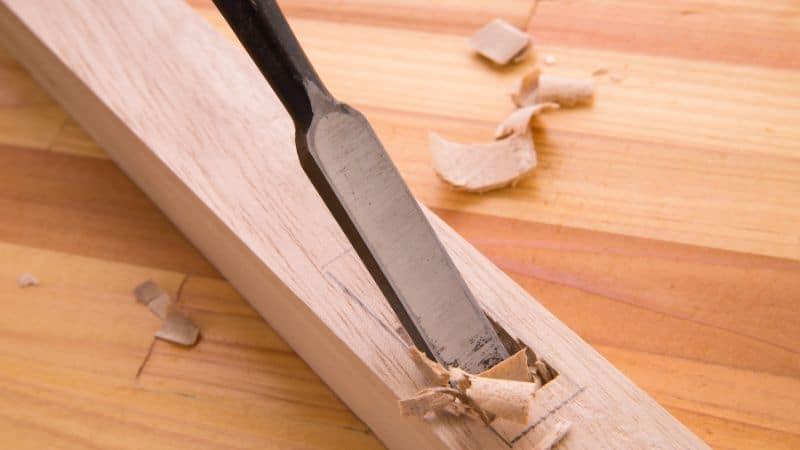
A chisel is a sharp-edged tool designed to cut, shape, and carve materials like wood, stone, and metal.
Here are the main components of a chisel:
| Main Components | Function |
|---|---|
| Blade | Cuts and shapes material |
| Handle | Provides grip and control |
| Beveled edge | Creates sharp cutting surface |
The blade angle matters for how the chisel cuts. Flat chisels make straight cuts. Beveled chisels create angled cuts and detailed work.
How Does a Chisel Work?
A chisel works by using concentrated force to cut and shape materials. The tool focuses pressure from your hand through its handle onto a sharp, narrow blade edge.
When you push or strike a chisel, the blade creates a wedge action. This wedge splits fibers in wood or breaks bonds in other materials like metal or stone, cleanly separating the material for a precise cut rather than crushing it.
The blade’s bevel angle determines how the chisel cuts. A lower angle creates sharper cuts but is more fragile. A higher angle is stronger but requires more force.
Key components that make chisels work:
- Sharp blade edge that concentrates force
- Beveled surface that guides material away
- Handle that transfers your hand pressure
- Flat back that controls cutting direction
You control the chisel by adjusting the angle between the blade and your work surface. A shallow angle removes thin shavings. A steep angle removes thicker material.
Your grip and striking technique affect how well the chisel works. Firm control prevents the blade from wandering off your intended cut line.
Fundamental Types of Chisels
Chisels come in different shapes. Depending on their intended use, they can be broadly categorized into three main types. Each type serves specific tasks in woodworking, metalworking, and masonry projects.
| Type of Chisel | Primary Use | Blade Characteristics | Key Features |
|---|---|---|---|
| Wood Chisels | Carpentry, Furniture | Thin, sharp, beveled edge | Precision cutting, clean finishes |
| Metal Chisels | Metalworking | Heavy, thick, hardened edge | Durability, impact-resistant |
| Stone Chisels | Masonry, Sculpture | Wide, sturdy, often pointed | Shock absorption, brute force application |
The above are the three most general categories. Next, we’ll explore the specific types of chisels and their uses.
Bench Chisels
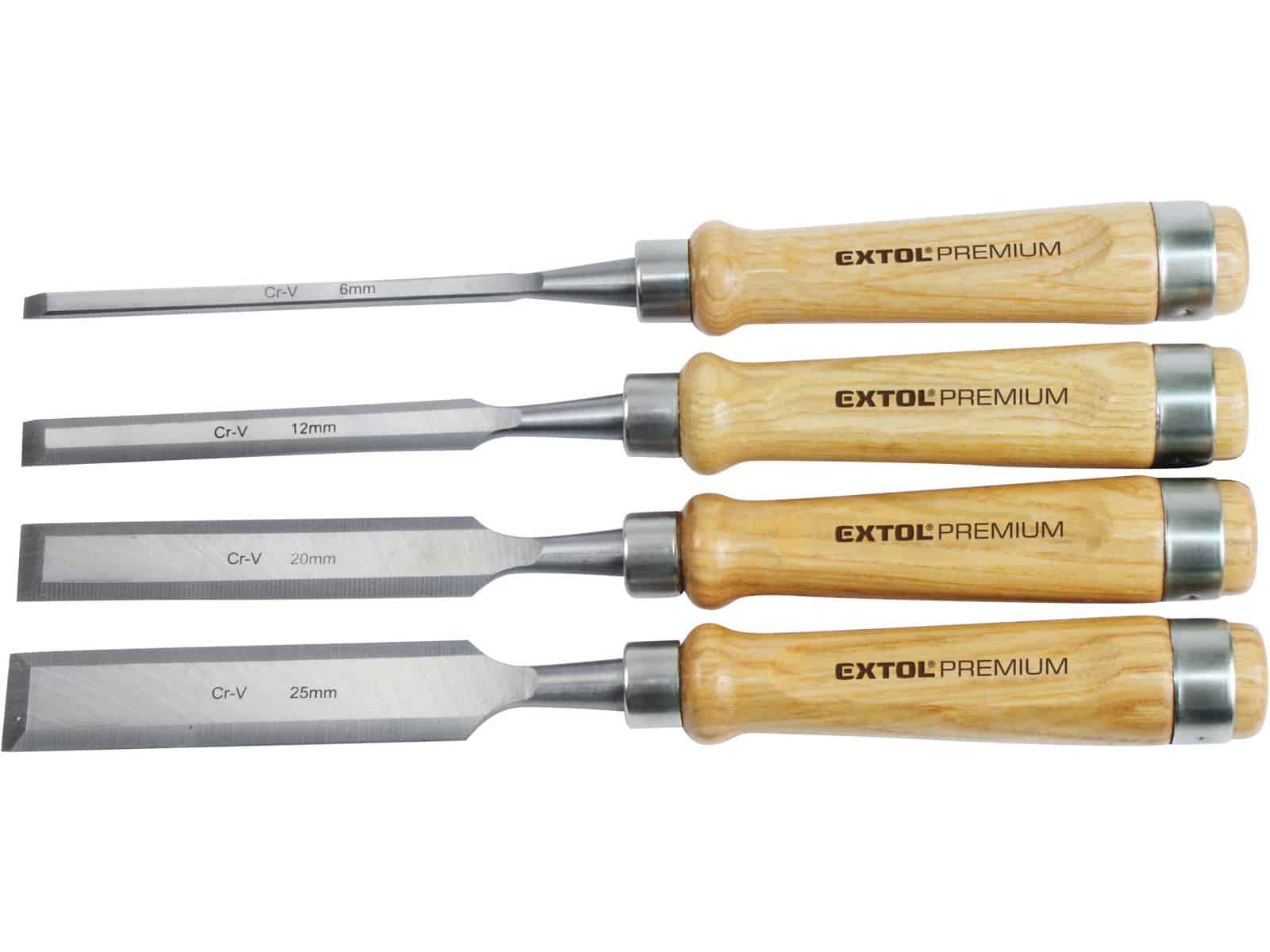
Bench chisels are the most common type of hand tools in woodworking shops. They feature medium-length blades with beveled edges on both sides.
You can use these versatile chisels for general cutting, shaping, and trimming tasks. The blade width typically ranges from 1/4 inch to 2 inches.
High-quality chisels in this category resist damage from regular mallet strikes. The balanced design gives you good control for precise cuts.
Most woodworkers start with a basic set of bench chisels. They handle about 80% of common chisel tasks around the shop.
Framing Chisels
Framing chisels have thick, heavy-duty blades designed for rough construction work. These robust tools can handle aggressive cutting and heavy mallet blows.
The blade length usually measures 3 to 4 inches with widths up to 2 inches. You’ll find these chisels essential for timber framing and log construction.
These chisels excel at removing large amounts of wood quickly. You shouldn’t expect fine detail work from framing chisels. They’re built for power, not precision.
Paring Chisels
Paring chisels have long, thin, flexible blades perfect for delicate work. You should never hit these tools with a mallet – they work by hand pressure only.
The thin blade design allows you to shave off paper-thin wood shavings. This makes them ideal for fitting joints and fine adjustments. The flexible blade bends slightly to follow wood grain patterns.
These specialized tools require careful handling. The thin blades can break if you apply too much force or twist them sideways.
Mortise Chisels
Mortise chisels create square holes called mortises in wood joints. They have thick, sturdy blades designed to withstand heavy chopping motions. You can drive mortise chisels straight down into wood without fear of blade damage.
The blade cross-section is rectangular and extra-thick to prevent bending. You’ll use these with heavy mallets for maximum cutting power.
These chisels work best for traditional mortise and tenon joinery. The thick blade clears wood chips efficiently from deep cuts.
Japanese Chisels
Japanese chisels feature laminated steel construction with extremely hard cutting edges. The blade has a flat back that creates razor-sharp results.
Traditional Japanese design uses a two-layer steel system. Hard steel forms the cutting edge while softer steel provides blade support.
You’ll need special sharpening techniques for these premium tools. The flat back must stay perfectly smooth for best performance.
Japanese chisels hold their edge longer than most Western designs. However, they require more maintenance and careful handling.
Butt Chisels
The blade of a butt chisel is relatively short, typically 3 to 4 inches, making it significantly shorter than a standard bench chisel. This compact size allows it to fit into tight spaces, such as when installing door hinges and cabinet hardware, where longer chisels would be unusable.
You can work closer to your cutting line with butt chisels. The short blade reduces the chance of accidentally cutting too deep.
Dovetail Chisels
Dovetail chisels are designed specifically for cutting dovetail joints. The thin profile fits perfectly between dovetail pins and tails.
They have narrow blades. Blade widths range from 1/8 inch to 1/2 inch. The narrow design allows you to reach into narrow spaces that wider chisels cannot access.
Hand-cut dovetails require this type of precision tool. Machine-cut joints rarely need such specialized equipment.
Masonry Chisels
Masonry chisels cut through stone, brick, and concrete materials. They feature hardened steel blades that resist damage from hard surfaces.
The cutting edge is wider and blunter than wood chisels. This design breaks apart masonry materials rather than slicing through them. You’ll use these with heavy hammers. The wide blade distributes impact force across a larger area.
Different blade shapes handle specific masonry tasks. Pointed chisels break apart mortar while flat chisels trim stone edges.
Cold Chisels
Cold chisels cut metal materials at room temperature. They have hardened steel construction that stays sharp when cutting through iron and steel.
The blade has a wedge shape with a sharp cutting edge. These tools cut through bolts, chains, and metal stock. You’ll use these with heavy hammers for maximum cutting force.
Safety glasses are essential when using cold chisels. Metal chips fly in all directions during cutting.
Frequently Asked Questions
What are the distinguishing features of firmer chisels compared to other chisel types?
Distinguished by their thick, rectangular blades and square edges, firmer chisels are built for strength and heavy-duty work. Their robust, unbeveled design and sturdy tang construction allow them to withstand heavy mallet blows, making them ideal for chopping mortises and rough shaping. Unlike finer paring or bench chisels, they prioritize durability and power over delicate precision, enabling efficient removal of material in demanding woodworking tasks where resilience is essential.
How are mortise chisels specifically designed for their purpose in woodworking?
Mortise chisels feature extra-thick blades that resist bending when you work in deep holes. The blade thickness ranges from 1/4 inch to over 3/8 inch. Their narrow width helps you cut precise rectangular holes called mortises. The sides are perfectly parallel to create clean, straight walls. You’ll notice the blade has a slight hollow grind on the sides. This reduces friction when you’re working deep inside the mortise hole. The handles are shorter and thicker than other chisels. This gives you better control and leverage when chopping out waste material.
Can you list the common uses for each type of chisel found in a workshop?
Paring chisels work best for fine trimming and fitting joints by hand. You use them to shave thin layers of wood for precise adjustments.
Firmer chisels handle rough chopping and general woodworking tasks. They’re perfect for cleaning up saw cuts and removing waste material.
Mortise chisels cut deep rectangular holes for mortise and tenon joints. You use them with a mallet to chop out square cavities.
Bevel-edge chisels fit into tight corners and dovetail joints. Their angled edges let you reach areas other chisels cannot access.
Gouge chisels carve curved cuts and hollow out rounded shapes. They’re essential for sculptural work and decorative details.
How do the materials used in chisel construction affect their performance and durability?
The steel hardness rating determines how long your edge lasts. Harder steel stays sharp longer but becomes more difficult to sharpen. High-carbon steel holds the sharpest edge but requires more maintenance. You’ll need to prevent rust and sharpen these chisels more frequently. Stainless steel resists corrosion but doesn’t hold an edge as well. These chisels work better in humid conditions or outdoor projects. Tool steel offers a good balance of sharpness and durability. Most professional-grade chisels use this material for reliable performance.
Handle materials affect comfort and shock absorption during use. Hardwood handles feel traditional while composite materials reduce vibration.
In what ways are flat chisels uniquely suited for their tasks compared to other chisel shapes?
Flat chisels are the fundamental choice for achieving precision and flatness in woodworking. Their broad, straight edge is indispensable for tasks like paring large surfaces, defining sharp corners in joinery, and cleaning out glue or debris without damaging the workpiece. The flat back serves as a reliable reference to ensure cuts are perfectly perpendicular, making them ideal for fine-tuning tenon shoulders and dados. Unlike gouges or skew chisels, they excel at producing uniform, ridge-free results, establishing them as the essential tool for foundational work where accuracy and a flawless finish are paramount.