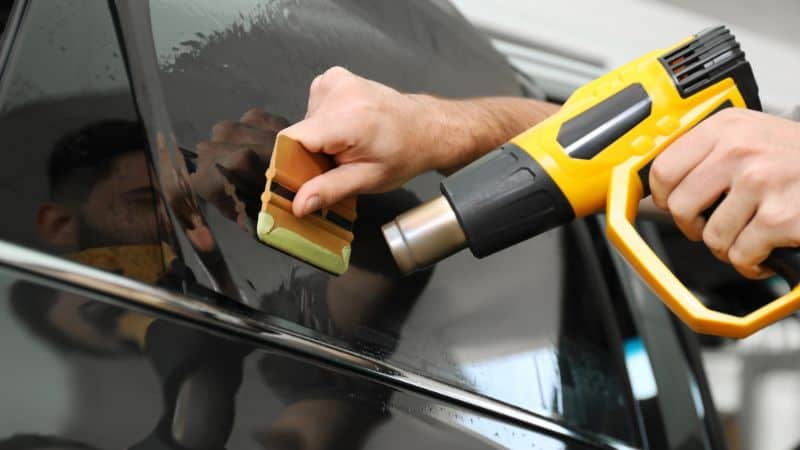
Stuck on a project that needs heat? Whether you’re shrink-wrapping a gift, peeling off a stubborn sticker, or working on a craft, it’s tempting to grab your hair dryer to get the job done. But before you do, it’s crucial to know when this common shortcut works—and when it could ruin your project or even be dangerous.
This guide will break down the key differences between a heat gun and a hair dryer in simple terms. We’ll compare their temperature, safety, and best uses so you can confidently choose the right tool for the job.
Heat Gun vs Hair Dryer: Side-by-Side Comparison
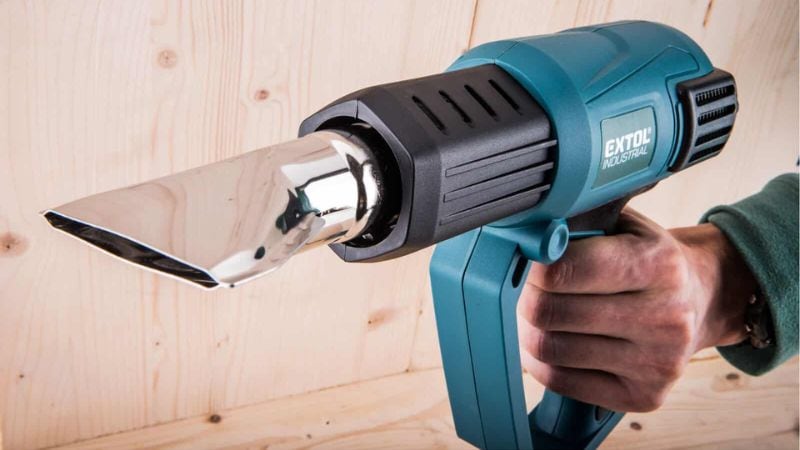
Let’s start with a quick overview. Think of a heat gun as a focused, high-power oven for your projects, and a hair dryer as a gentle, warm breeze for your hair.
| Feature | Heat Gun | Hair Dryer |
|---|---|---|
| Best For | Heavy-duty tasks: stripping paint, heat shrinking tubing, bending plastic. | Styling hair, low-heat crafts, drying nails. |
| Temperature | Very High (100°C to over 600°C / 212°F to 1112°F) | Low to Medium (30°C to 60°C / 85°F to 140°F) |
| Airflow | Concentrated, high-speed hot air | Wide, high-volume |
| Cost | $$ (Generally more expensive) | $ (Wide range, but generally less expensive) |
| Safety | High burn/fire risk; requires careful use. | Safer for personal use; plastic body stays cooler. |
| Noise Level | Loud, lower-pitched roar | High-pitched whir |
| Accessories | Functional nozzles for focusing heat. | Styling nozzles for directing airflow. |
Now, let’s dive into the details.
1. Temperature and Power
This is the most significant difference between the two tools.
- A heat gun is all about raw, intense heat. It is designed to get extremely hot, with temperatures that can range from 100°C (212°F) to over 600°C (1112°F). This is hot enough to soften paint, melt solder, and weld plastic. Its main job is to heat materials quickly and effectively, and it uses a powerful heating element to do so.
- A hair dryer, on the other hand, is designed with safety in mind—the safety of your hair and scalp. Its temperature is much lower, typically maxing out around 60°C (140°F). It often doesn’t provide enough heat for industrial tasks. Its primary goal is to move a large volume of air to evaporate water from your hair, not to melt things.
The Bottom Line: If your task involves melting, bending, or stripping, you need the high heat of a heat gun. A hair dryer simply doesn’t get hot enough.
2. Airflow
The way these tools move air is also completely different.
- A heat gun has a focused, high-speed airflow that comes out of a small, narrow nozzle. This design directs all the intense heat to a very specific spot, which is perfect for tasks like loosening a single rusty bolt or shrinking a piece of tubing.
- A hair dryer has a wide, high-volume airflow. It needs to cover your entire head of hair quickly. The air is more diffused and spread out. While attachments like a concentrator nozzle can help focus it a bit, it will never be as pinpoint as a heat gun.
The Bottom Line: If you need to heat a small, precise area, a heat gun’s focused airflow is essential. A hair dryer is better for warming a larger area.
3. Safety Features
Because of the extreme heat involved, safety is a major differentiator.
- Heat guns are high-risk tools. They can cause severe burns in seconds and are a serious fire hazard if placed near flammable materials like paper, cloth, or curtains. Many come with a built-in stand to point the hot nozzle safely away while in use. Their outer shell is also made of heat-resistant materials designed to handle the high internal temperatures.
- Hair dryers are built to be much safer for everyday home use. They have plastic bodies that don’t get as hot to the touch. They also feature safety grills to prevent objects from touching the heating element and often have an automatic shut-off switch if the motor overheats from a blocked air intake.
The Bottom Line: Always treat a heat gun with extreme caution. A hair dryer is a much safer appliance for casual use.
4. Functionality
How you use these tools on a daily basis also varies.
- A heat gun is a specialist. It’s built for sustained, high-heat operation. You can often find models with multiple, precise temperature control settings (e.g., 300°F, 500°F, 750°F) and a “cool shot” button that blows unheated air. This is crucial for cooling down a material you’ve just heated, like setting a shrink-wrapped seal.
- A hair dryer is a generalist. Its settings are about “low,” “medium,” and “high” heat and speed. It’s designed for short, intermittent cycles. Running a hair dryer for too long can cause its motor to overheat and burn out. Its “cool” setting is for styling hair, not for managing project temperatures.
5. Cost
You generally get what you pay for in terms of power and durability.
- Heat guns are typically more expensive than basic hair dryers. They are built with heavier-duty components designed to withstand high temperatures and longer use. You are paying for power and precision.
- Hair dryers have a very wide price range, from very cheap models to professional-grade ones. However, even an expensive hair dryer is not built for the same industrial tasks as a heat gun.
6. Noise Level
Both tools are loud, but in different ways.
- A heat gun produces a loud, lower-pitched roaring sound. It’s the sound of a powerful motor and intense, focused air movement.
- A hair dryer is known for its distinctive high-pitched whirring noise. It can be just as loud as a heat gun, but the pitch is often considered more piercing.
7. Accessories
The attachments that come with each tool tell you exactly what they’re meant for.
Heat gun accessories are all about controlling heat:
- Reflector Nozzle: Bends the airflow to the side for tasks like stripping paint from a flat surface.
- Reducing Nozzle: Narrows the airflow even more for extreme precision.
Hair dryer accessories are all about styling:
- Concentrator Nozzle: Focuses the airflow on a section of hair for smoother drying.
- Diffuser: Spreads the airflow out to add volume and enhance natural curls.
Can I Use a Hair Dryer As a Heat Gun?
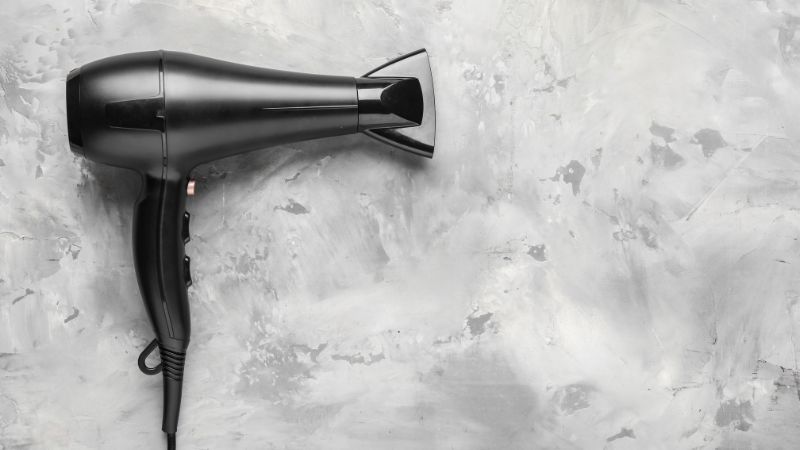
This is the million-dollar question. The answer is: Sometimes, but with major limitations.
When a hair dryer MIGHT work:
- Low-Heat Crafts: For crafts like heat embossing, where you melt a special powder, a hair dryer can sometimes work, but it’s less controlled and can blow the powder away.
- Very Light Shrink Wrap: For the thinnest plastic shrink wrap, a hair dryer might be able to do the job, but it will be slower and the seal may not be as tight.
- Removing Weak Stickers: A mild adhesive on a price tag might loosen with a hair dryer.
When it’s a BAD idea:
- Stripping Paint: A hair dryer won’t get hot enough.
- Shrinking Electrical Tubing: The seal won’t be secure, which is a safety hazard.
- Bending Plastic: It won’t provide enough concentrated heat.
- Applying Vinyl Wraps: Won’t provide consistent heat for proper adhesion.
- Thawing Pipes: It will take far too long and may not work at all.
The Risk: Using a hair dryer for a heat gun’s job can overwork its motor, causing it to overheat and break. More importantly, you risk starting a fire by holding a hair dryer too close to a material for too long.
Frequently Asked Questions
What is the main difference between a heat gun and a hair dryer?
The main difference is temperature. Heat guns get 3 to 10 times hotter than hair dryers and are built for tough DIY and industrial tasks.
Can I use a hair dryer to speed up paint drying?
While possible, it’s not ideal. The uneven heat can cause paint to bubble or crack. It’s better to allow paint to dry naturally in a well-ventilated area.
Can I use a hair dryer to dry wet electronics?
While the low heat setting might seem helpful, it’s not recommended. The airflow can push moisture deeper into the device. Instead, use compressed air or silica gel packs.
Can a heat gun be used to dry hair?
Absolutely not. Using a heat gun to dry hair is extremely dangerous. The intense heat can cause severe burns and will instantly damage your hair.
Are there any tools that are a middle ground?
Yes! “Craft heat tools” or low-temperature heat guns are available. They offer more heat than a hair dryer but less than a full-power heat gun, making them perfect for hobbies.
Conclusion
While it might be tempting to use the tool you already have, remember the old saying: “Use the right tool for the job.” For your project’s success and personal safety, always choose the right tool based on the above guidelines to get the job done properly.