Angle grinders are essential for jobs that involve shaping, smoothing, or removing excess material quickly and safely. With the right attachment, you can tackle tough DIY projects or handle repairs around your home.
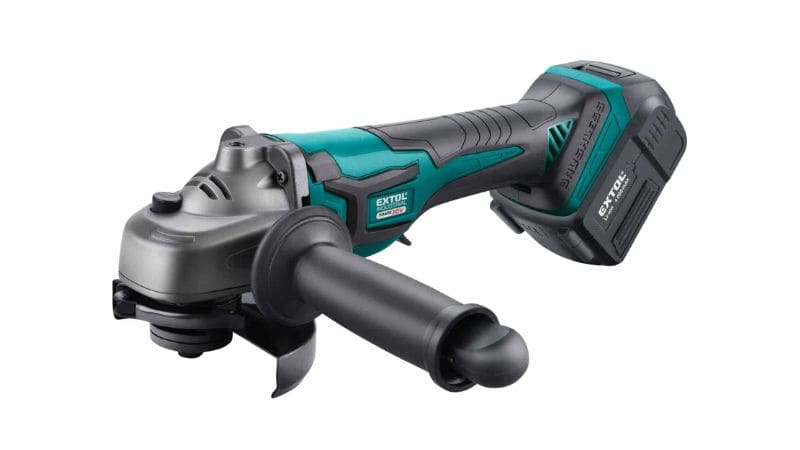
If you work with metal, an angle grinder helps you cut pipes, sharpen blades, and smooth rough edges. You can also use them for tasks in woodworking and masonry, making them useful for more than just professionals. This guide will show you the many ways angle grinders can make your projects easier and more efficient.
What is an Angle Grinder?

An angle grinder is a handheld power tool that spins a disc at high speeds. You can use it to cut, grind, polish, or sand different materials. Its design and features make it suitable for metal, concrete, stone, and other hard surfaces.
Key Components & Types
Angle grinders have several main parts. The most visible is the rotating disc or wheel. You can change this disc based on the job, such as cutting or grinding. The motor provides power, usually measured in amps or watts, and can be corded or cordless. You hold the tool using a main handle and an extra side handle for better control. Some models have a tool-free guard adjustment or variable speed controls. Safety features, such as spindle locks and protective guards, help you use the tool safely.
| Component | Purpose |
|---|---|
| Disc/Wheel | Cutting, grinding, sanding |
| Motor | Powers rotation |
| Handle(s) | Stability and control |
| Safety Guard | Protects from sparks/debris |
Types of angle grinders include small (4-5 inches), medium (7-9 inches), and large (over 9 inches) models. The most common are 4.5-inch grinders, good for general tasks. There are also pneumatic grinders, which use compressed air, and electric grinders, which use mains power or batteries.
How Does It Work?
When you turn on an angle grinder, the motor spins the attached disc at high speed. The speed is usually between 8,000 and 12,000 revolutions per minute (RPM). You hold the tool so that the disc makes contact with the material you want to cut or grind.
Changing the disc to match the job is important. For example, a thin disc for cutting, a thicker disc for grinding, or a wire brush for removing rust. The protective guard stops debris and sparks from hitting you.
Some grinders come with speed controls, so you can adjust the power. The two-handed grip helps keep the tool steady and reduces vibration. Always wear safety gear like gloves and goggles, since the rotating disc can throw off sparks or tiny bits of material.
What is an Angle Grinder Used for?
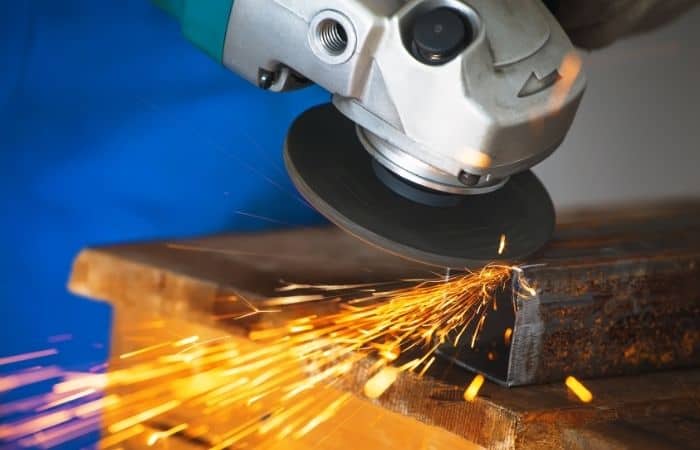
Angle grinders serve as versatile power tools with many industrial applications. Here are six main applications.
Cutting Metal
Angle grinders are often used for cutting many types of metal, like steel pipes, rods, or sheet metal. Cutting metal with an angle grinder is fast and precise compared to using a hacksaw. You need to use a cutting wheel, usually made from an abrasive material or a diamond blade. You can make straight or curved cuts, depending on your project.
Cutting Technique:
- Secure the workpiece in a vise or with clamps to prevent movement.
- Two-handed grip: Maintain firm control with both hands.
- Slow, steady pressure: Let the disc cut without forcing it.
- For curved cuts: Move the grinder in a controlled arc.
*Cutting produces a lot of sparks, so wear goggles, gloves, and long sleeves. Keep flammable materials away. Never force the tool; let the disc do the work.
Grinding Metal
Grinding is another common use for angle grinders. You can smooth out rough welds, edges, or remove excess material from metal. Choose a grinding disc made for metal. These discs are thicker and stronger than those used for cutting.
Optimal Technique:
- Disc Selection: Use reinforced grinding discs (typically 6-10mm thick) specifically designed for metalwork
- Tool Positioning: Maintain a 15-30° angle to the workpiece surface
- Movement Pattern: Employ controlled, alternating strokes to ensure even material removal
*Grinding is messy and loud, so use ear and eye protection. Grinders can quickly wear down the metal if you press too hard, so use gentle pressure.
Cutting Tiles
Angle grinder can cut ceramic, porcelain, or even stone tiles if you use a diamond-tipped blade. This is helpful for bathroom renovations, kitchen backsplashes, or flooring projects.
Professional Cutting Technique:
- Marking: Use a wax pencil or grease marker for visible, dust-resistant cut lines
- Workpiece Stabilization: Secure tiles on a non-slip cutting mat or clamp to a stable surface
Cutting Method:
- Initiate cuts with 2-3mm scoring passes
- Complete with full-depth passes at controlled speed
- For curved cuts: Pivot the grinder using the blade edge as a fulcrum
*Always wear a mask, since cutting tiles can make a lot of dust. Using water while cutting can help keep dust down and cool the blade, but make sure your angle grinder is rated for wet use. Take your time for clean, smooth results.
Sanding Wood
Angle grinders can sand wood if you use the right sanding attachment, like a flap disc or sanding pad. This tool works well on large, flat surfaces, such as tabletops, doors, or old floorboards. Angle grinders can remove old varnish, paint, or smooth out rough spots quickly.
Technical Approach:
- Begin with coarse grit (40-60) for stock removal
- Progressively refine with medium (80-120) and fine (150-220) abrasives
- Maintain 10-15° tool angle with constant motion to prevent “tiger striping”
- Use variable-speed models (8,000-12,000 RPM) for delicate work
*Make sure to wear a dust mask, goggles, and hearing protection, as sanding wood creates dust and noise. Angle grinders are not as precise as orbital sanders but are great for tough jobs and initial stages of sanding.
Cutting Concrete
You can cut concrete, stone, or brick using a diamond blade on your angle grinder. This is useful for making adjustments when laying pavers, trimming blocks, or cutting through mortar for repair work.
Cutting Technique:
1. Preparation:
- Clearly mark cut lines with a lumber crayon or paint pen for high visibility
- Secure materials using heavy-duty clamps or vacuum workholding systems
2. Cutting Execution:
- Initiate cuts at 45° angle, gradually straightening to 90° for plunge cuts
- Maintain consistent 1/4″ to 3/8″ depth per pass on thick concrete
- Allow the blade to reach full operating speed before engaging the material
*When cutting concrete, always work outdoors or in a well-ventilated area, as dust can be harmful. Use a dust mask, and consider using water to keep dust down if your grinder allows it. Select the blade type that matches the material for the cleanest and safest results.
Removing Rust or Paint
Removing rust or old paint is easy with an angle grinder and a wire brush attachment or stripping disc. You can quickly strip layers from metal gates, fences, or car parts. This is important for preparing surfaces before painting or restoring tools.
Professional Techniques:
1. Surface Evaluation:
- Identify substrate material
- Assess coating thickness
- Determine required surface profile
2. Progressive Refinement:
- Heavy rust: Start with P36 grit stripping disc
- Medium oxidation: Use coarse wire brush
- Final prep: Finish with fine abrasive pad
*Wear long sleeves, gloves, and a dust mask, as removing rust or paint can send flakes and dust flying.
How Should I Choose An Angle Grinder?
Selecting the right angle grinder is easier when you focus on what you want to do with it, what powers it, and which features fit your needs and budget. The type of jobs, disc size, motor strength, and tool design all matter when picking one that works well for you.
Determine the Purpose
Think about the main tasks you want to do with your angle grinder. Some common uses are cutting, grinding, sanding, and polishing. Each job may need a certain disc size or feature.
| Application | Best Disc/Attachment |
|---|---|
| Metal Cutting | Thin cutting disc (1–3 mm) |
| Rust/Paint Removal | Twisted wire brush / Stripping disc |
| Tile/Concrete Cutting | Diamond blade (segmented/continuous) |
| Grinding Metal | Thick grinding wheel (6–10 mm) |
| Wood Sanding | Flap disc / Sanding pad (40–120 grit) |
| Polishing | Wool/felt buffing pad + compound |
Before buying, list out which materials you’ll cut or grind. This will help you pick the right disc size, type, and machine strength. Knowing your main tasks saves money and helps you avoid buying a grinder that is too weak or too advanced for your needs.
Power Source: Corded vs. Cordless
Choose between corded and cordless because each offers different benefits.
Corded angle grinders are usually more powerful. They can run as long as you need and are better for heavy-duty tasks. You do need to work near an outlet, which might limit your movement.
Cordless grinders offer better mobility. They are easier to use outdoors or on job sites without power. However, batteries can run out fast, especially during tough jobs, and newer models are often more expensive.
If you work in one place for long hours, a corded grinder is better. If you move from place to place, a cordless model may suit you more.
| Type | Pros | Cons |
|---|---|---|
| Corded | More power, no time limits | Needs outlet, less mobile |
| Cordless | Portable, light, no cord | Battery life, cost |
Motor Power & Speed
Motor power impacts how quickly and cleanly you can cut or grind. Look for the wattage or amp rating on corded models and voltage for cordless. Higher numbers mean more power, which is good for cutting thick materials or large projects.
Speed is measured in revolutions per minute (RPM). Many household grinders have speeds between 7,000 and 12,000 RPM. Higher speeds let you cut or grind faster but can also make the tool harder to control.
Some grinders offer variable speed controls. This helps if you work with different materials, since some need slower or faster speeds. Match the motor power and RPM to your usual jobs. More power is not always better for lighter work since it can make the grinder heavy and harder to use.
Disc Compatibility
The abrasive disc size determines what jobs the grinder can do. Most models use 4.5-inch or 5-inch discs, good for basic cutting and grinding. Larger machines can use 7-inch or even 9-inch discs for bigger jobs.
Check what kinds of discs are available for the grinder you want. Look for compatibility with special discs, such as diamond blades for masonry or flap wheels for sanding. Make sure it is easy to change discs, and see if the tool uses standard sizes.
Proper disc compatibility means your grinder can handle many tasks over time without needing to buy a new model.
Frequently Asked Questions
What types of materials can be ground with an angle grinder?
You can grind many materials like metal, concrete, stone, and tiles. Special discs are made for each type of material. Using the right disc helps you get the wanted finish and prevents damage to the tool.
What are the safety precautions when operating an angle grinder?
Always wear safety glasses, gloves, and hearing protection. Secure the object you are working on and keep a firm grip on the tool. Be aware that discs can break or send debris flying. Never use a damaged disc or remove the safety guard.
How do you maintain an angle grinder?
Clean dust and debris from the tool after each use. Check discs and attachments for damage before using them. Lubricate moving parts when needed and make sure all guards and screws are tight and secure.