Choosing between a 20V and a 40V cordless garden tool platform isn’t a single decision — the right answer changes depending on the tool category, and it matters even more for a distributor stocking a product line than for someone buying one tool for personal use. This guide covers what the voltage numbers actually mean, how that difference plays out across the main garden tool categories, and how to decide which platform — or both — makes sense to carry.
What Does Voltage Mean for a Power Tool?
Before comparing 20V and 40V, it helps to have a simple mental picture of what voltage is actually doing.
- Think of voltage as how hard the battery can “push.” The higher the voltage, the more electrical push is available to drive the motor. In practice, that means more strength when the tool hits resistance — a thick branch, dense grass, hardwood.
- Voltage isn’t the same as speed. A higher-voltage tool doesn’t spin faster just because the number is bigger — that depends on the motor and gearing too. What voltage mostly changes is how much strength the tool has, not how fast it spins on its own.
- The difference only really shows up when the tool is working hard. Running a trimmer through soft grass or a drill spinning with nothing attached barely uses any power, whatever the voltage. The gap between 20V and 40V becomes obvious once the tool meets real resistance — that’s the moment a 20V tool might slow down or stall, and a 40V tool keeps going.
- Voltage is only part of the story. How long the battery lasts on one charge is a separate spec (capacity, covered below) — a tool can have high voltage and still run out quickly if the battery itself is small.
In one sentence: voltage is a rough measure of how much muscle a tool has under load — which is exactly why “20V” and “40V” are used to mark the line between standard and heavy-duty tool lines.
What’s the Difference Between 20V and 40V Batteries?
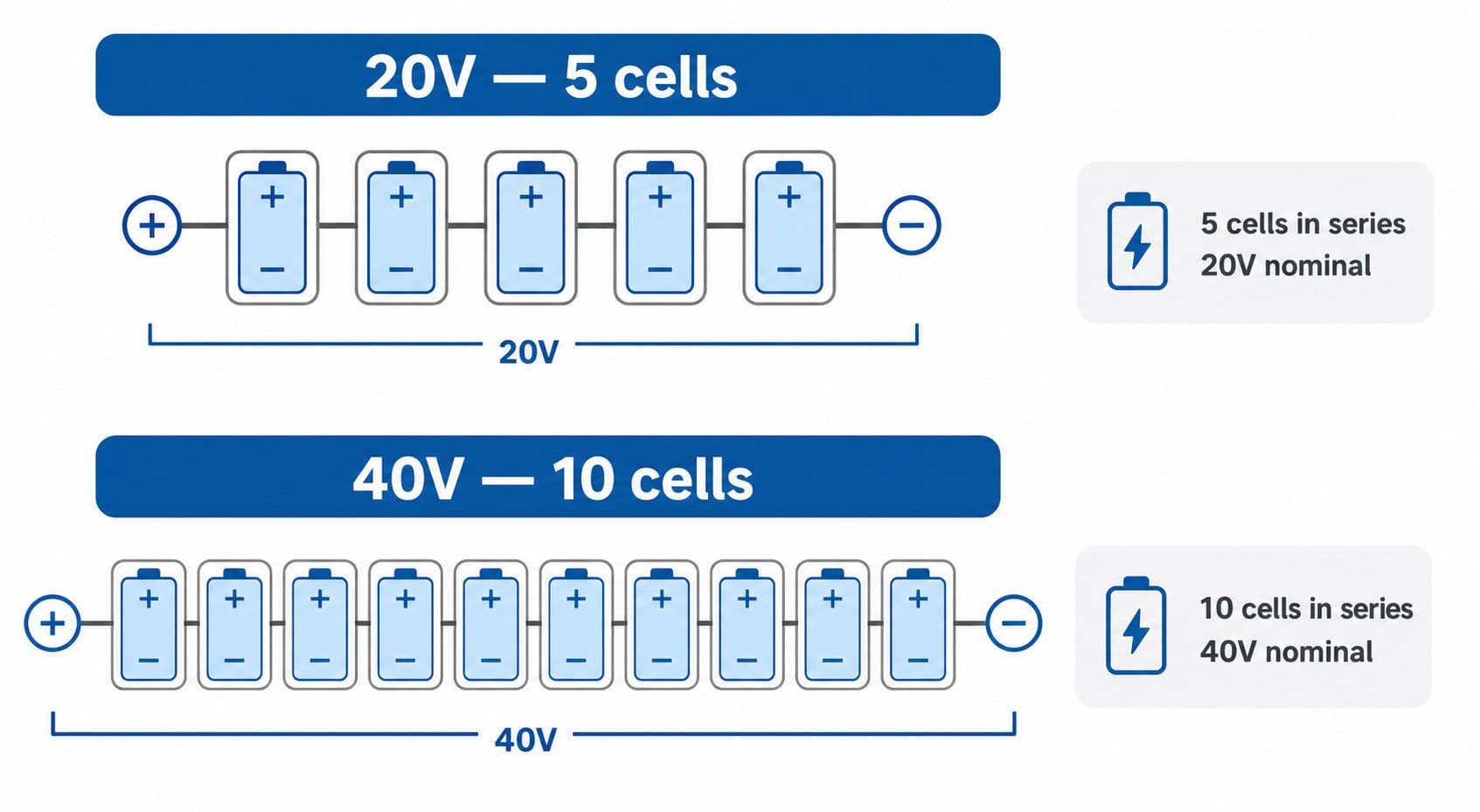
- Cell count. A 20V battery has 5 cells; a 40V battery has 10 cells — double the cells, roughly double the power available.
- The numbers are rounded up. Actual voltage is closer to 18V and 36V; “20V” and “40V” are the peak reading off the charger, which is also why some brands just call their 18V battery “20V MAX.”
- More power, less strain. Power = Voltage × Current, so a 40V battery delivers about double the power of a 20V battery at the same current — which is also why it runs cooler under heavy use.
- Runtime depends on capacity, not voltage. Two batteries at the same voltage can have very different runtimes depending on their Ah rating — check capacity separately from voltage.
- Trade-off. More cells means more weight and more cost.
Garden Tool Comparison: 20V vs 40V by Category
1.Hedge Trimmers
| 20V | 40V | |
|---|---|---|
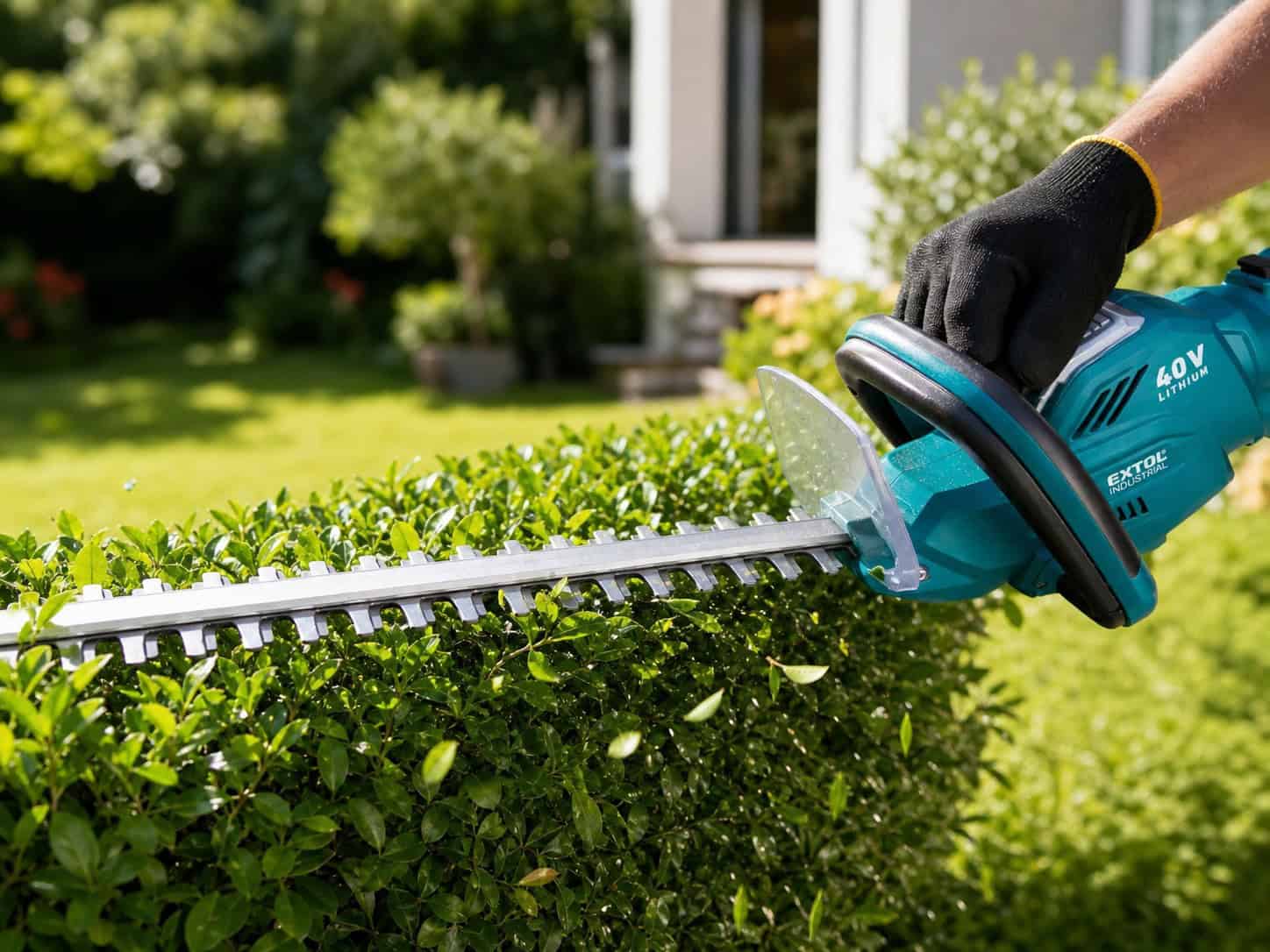
| Best suited for | Standard residential hedges, shorter sessions | Thicker, denser hedges, longer commercial sessions |
| Weight | Lighter, easier to control one-handed | Heavier, more strain on extended overhead use |
| Cutting performance | Sufficient for routine trimming | Sustains cutting speed on tougher growth |
20V pros: lighter, less fatigue on extended handheld use, lower cost. 20V cons: may bog down on very thick or overgrown hedges. 40V pros: more consistent cutting power through dense material. 40V cons: heavier, higher cost, harder to control on prolonged overhead work.
2.Chainsaws
| 20V | 40V | |
|---|---|---|
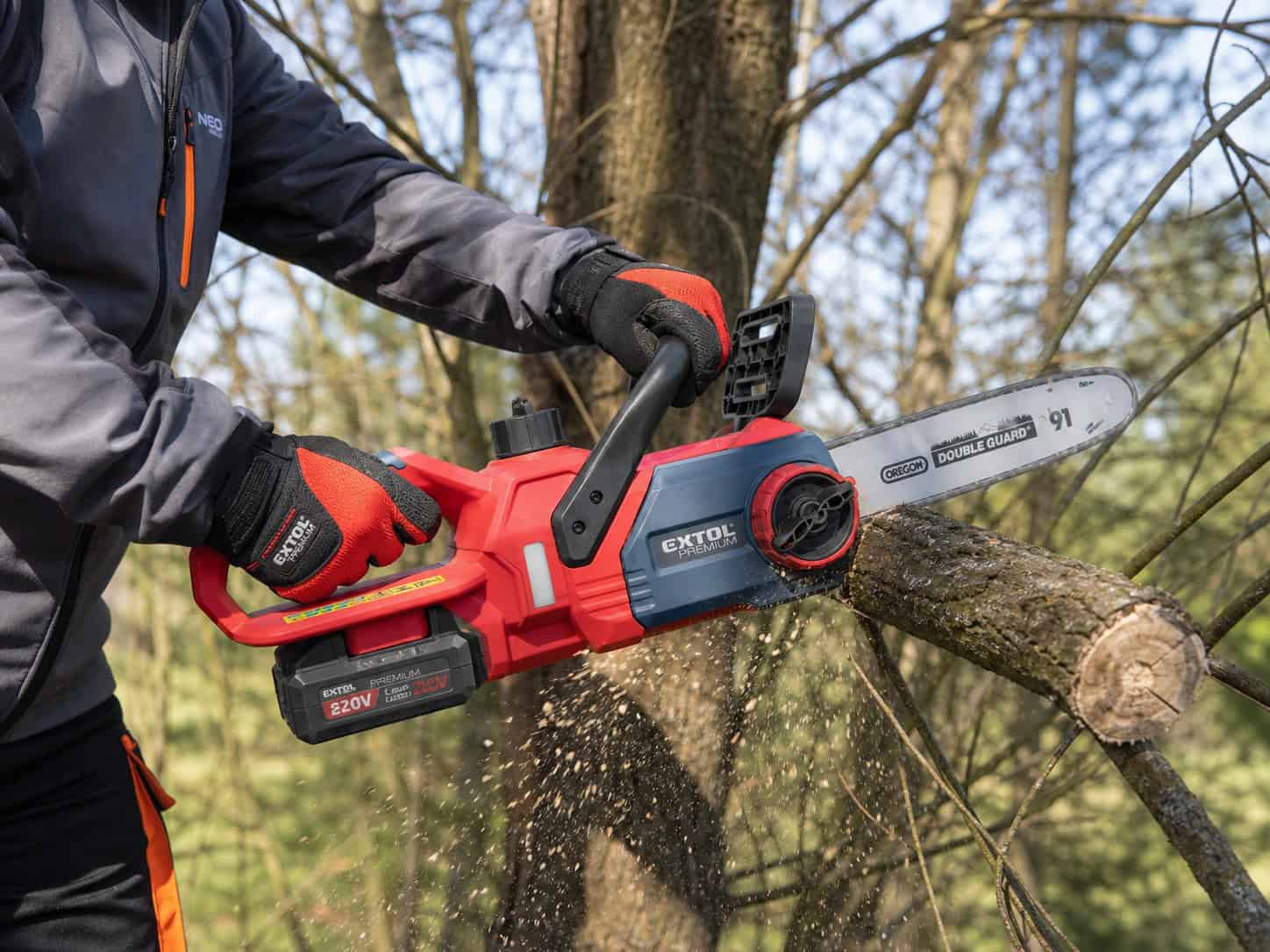
| Best suited for | Light pruning, branch cleanup | Firewood processing, larger-diameter cuts |
| Chain speed under load | Drops more on thick material | Holds steady on thicker material |
| Weight | Lighter, easier one-handed control | Heavier, generally two-handed use recommended |
20V pros: lighter, adequate for routine yard cleanup.
20V cons: chain speed drops noticeably on thick wood.
40V pros: handles firewood-diameter cuts without bogging down.
40V cons: heavier, higher cost, may be more than needed for light pruning.
3.Lawn Mowers
| 20V | 40V | |
|---|---|---|
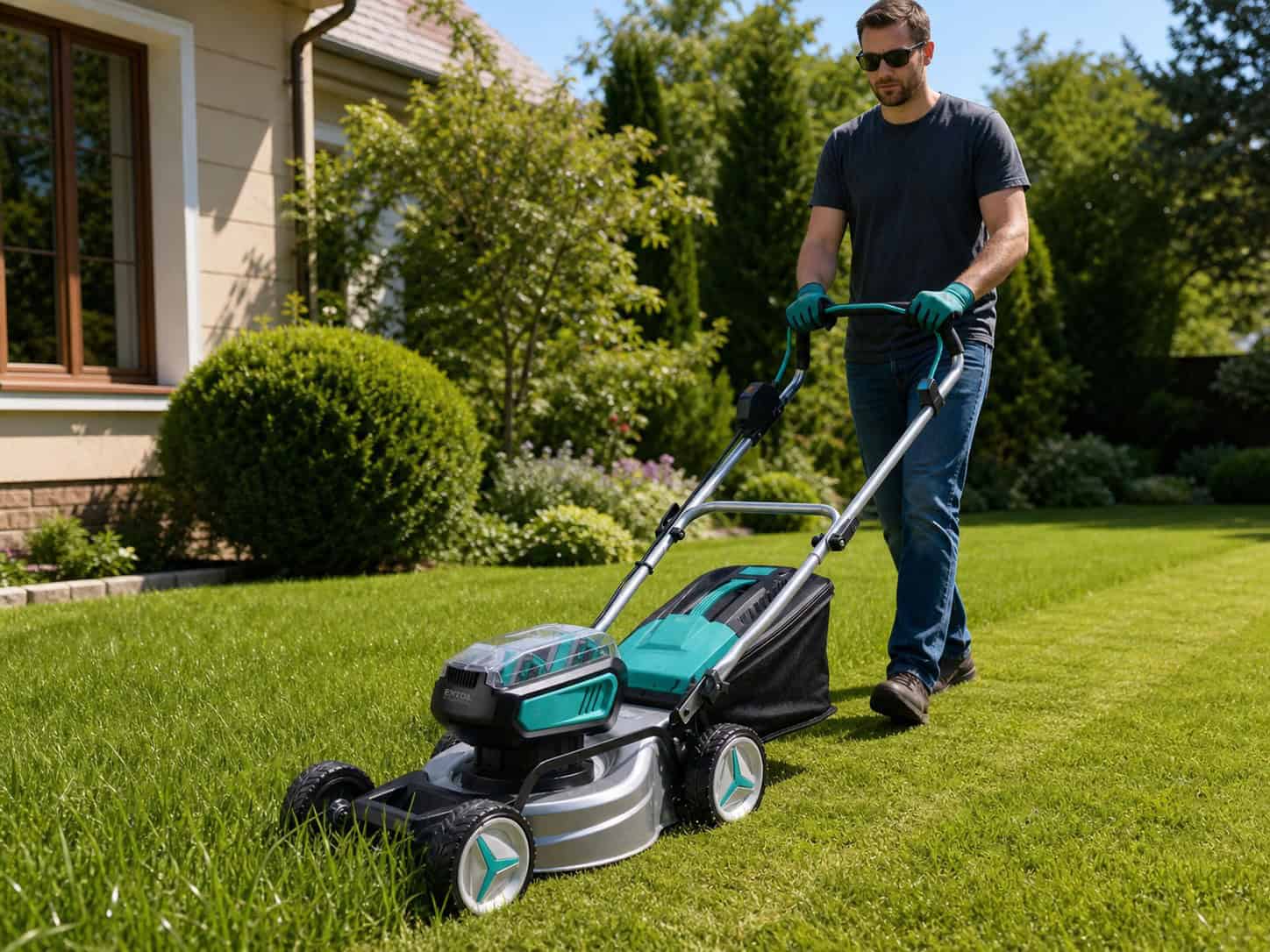
| Best suited for | Smaller lawns | Larger properties, thicker or overgrown grass |
| Motor performance under load | Can bog down in dense/wet grass | Sustains torque through variable grass density |
| Runtime per charge (practical) | Shorter, may need a battery swap on larger jobs | Longer, better suited to completing a full job in one charge |
20V pros: lower cost, adequate for small, well-maintained lawns.
20V cons: may struggle or need battery swaps on larger or overgrown lawns.
40V pros: completes larger mowing jobs without bogging down.
40V cons: higher cost, heavier unit to push.
4.Grass Trimmers / Strimmers
| 20V | 40V | |
|---|---|---|
| Best suited for | Standard edging and trimming | Wider cutting swath, heavier-duty line |
| Load sensitivity | Lower — trimmers draw less current than mowers/saws | Less relevant unless swath width or line gauge increases significantly |
20V pros: lighter, sufficient for most routine trimming.
20V cons: limited advantage from more voltage on this tool type specifically.
40V pros: supports wider swath or heavier line without bogging down.
40V cons: the extra power is less noticeable here than on mowers or chainsaws — may not justify the added weight and cost for this category alone.
5.Leaf Blowers
| 20V | 40V | |
|---|---|---|
| Best suited for | Light debris, smaller areas | Larger areas, wet or heavier debris |
| Airflow (CFM) / air speed (MPH) | Lower | Noticeably higher |
20V pros: lighter, adequate for light cleanup.
20V cons: airflow may be insufficient for heavier or wet debris.
40V pros: meaningfully higher airflow — one of the categories where the voltage jump is most noticeable in actual output.
40V cons: heavier, higher cost.
6.Pole / Extended-Reach Tools (Pole Hedge Trimmers, Pole Saws)
| 20V | 40V | |
|---|---|---|
| Best suited for | Extended overhead or reach work | Less common for this category |
| Weight at extended reach | Lighter pack reduces arm fatigue at the far end of the pole | Extra pack weight is felt more at full extension |
20V pros: the lighter battery is a genuine advantage here, since weight held at arm’s length or overhead matters more than on a standard handheld tool.
20V cons: may need a shorter session or a spare battery on larger jobs.
40V pros: more runtime and power.
40V cons: the added weight can outweigh the runtime benefit specifically in a pole configuration.
How to Choose Between 20V and 40V Garden Tools
- Match the platform to the tool category, not a blanket rule. As shown above, 40V has a clear advantage on mowers, chainsaws, and blowers; the advantage is much smaller on trimmers and pole tools, where weight matters more.
- Match the platform to the end customer. Residential or light-duty users are generally well served by 20V. Landscaping professionals, arborists, or crews running tools for extended sessions benefit more from 40V, particularly on higher-load tools.
- Consider battery platform lock-in. Once a customer owns two or three tools on one platform, their next purchase tends to stay on that platform, since batteries and chargers are the most expensive components to duplicate. A wholesaler benefits from stocking a genuinely deep range on whichever platform(s) they carry, not a token SKU or two.
- Consider inventory complexity. Every additional platform stocked means separate batteries, chargers, and marketing. Weigh this against the sales benefit of covering both platforms for a broader customer base.
- When in doubt, stock both. The category breakdown above shows no single voltage wins across every tool type — a distributor serving a mixed customer base is generally better off carrying both platforms in enough depth that each customer can self-select the right tool for their actual use case.
EXTOL’s Cordless Garden Tool Range
EXTOL manufactures cordless garden tools across both 20V and 40V platforms, spanning hedge trimmers, chainsaws, mowers, trimmers, blowers, and pole-reach tools.
Browse the 20V cordless system or the 40V cordless system, or request a quote to discuss which platform mix fits your market.
FAQ
Can 20V and 40V Batteries or Tools Be Used Interchangeably?
No. Batteries, tools, and chargers are built for a specific voltage platform and generally aren’t cross-compatible — putting a battery on the wrong platform’s tool can damage the battery, the tool, or both.
Does Higher Voltage Always Mean Better Performance?
Not automatically. Actual performance depends on voltage combined with current draw and motor design, and runtime depends on a separate spec — capacity (Ah) — not voltage alone. A well-built 20V tool can still outperform a poorly matched 40V one on a specific task.
Do 40V Batteries Take Longer to Charge Than 20V?
Generally yes, since they store more energy, but actual charging time depends more on the charger’s output than on voltage alone — a fast charger can offset a larger battery’s capacity. Worth checking the specific charger spec rather than assuming based on voltage.
If I Already Own 20V Tools, Is It Worth Switching to 40V?
Usually not for the sake of switching alone. If the current 20V tools are handling the job well, there’s little reason to change platforms. It’s more worth considering when a specific task — a larger lawn, denser hedges, heavier cutting — is consistently pushing past what the 20V tool can comfortably handle.