Importing power tools is a routine part of running a wholesale or distribution business, but the outcome of any given order — reliable, on-spec, on-time, or a headache that costs money to fix — depends heavily on how well the buyer understands both the sourcing landscape and the process itself. This guide covers both: why China dominates power tool sourcing in the first place, and the concrete steps that separate a smooth import from a costly mistake.
Why Buyers Import Power Tools from China
Global Production Share
- Multiple independent industry research reports converge on the same figure: China accounts for roughly 70–80% of the world’s power tool production and exports
- This supply reaches distributors and brands across Europe, North America, and Asia, not just a single regional market
- This isn’t a recent or temporary shift — it reflects decades of sustained manufacturing investment concentrating in specific regions
A Concentrated Component Ecosystem
- Modern power tools depend on a stack of specialized inputs: brushless motor controllers, lithium battery cells, precision gearing, injection-molded housings, and printed circuit boards
- China’s electronics and battery manufacturing infrastructure produces these components at a scale and cost that’s difficult to replicate elsewhere
- Having these components concentrated within the same regional supply chain — sometimes within the same industrial cluster — cuts both lead time and logistics complexity for final assembly
- A factory that has to import its motor controllers or battery cells from another country faces a structurally different cost and timeline than one that can source them locally
Manufacturing Scale and Cost Efficiency
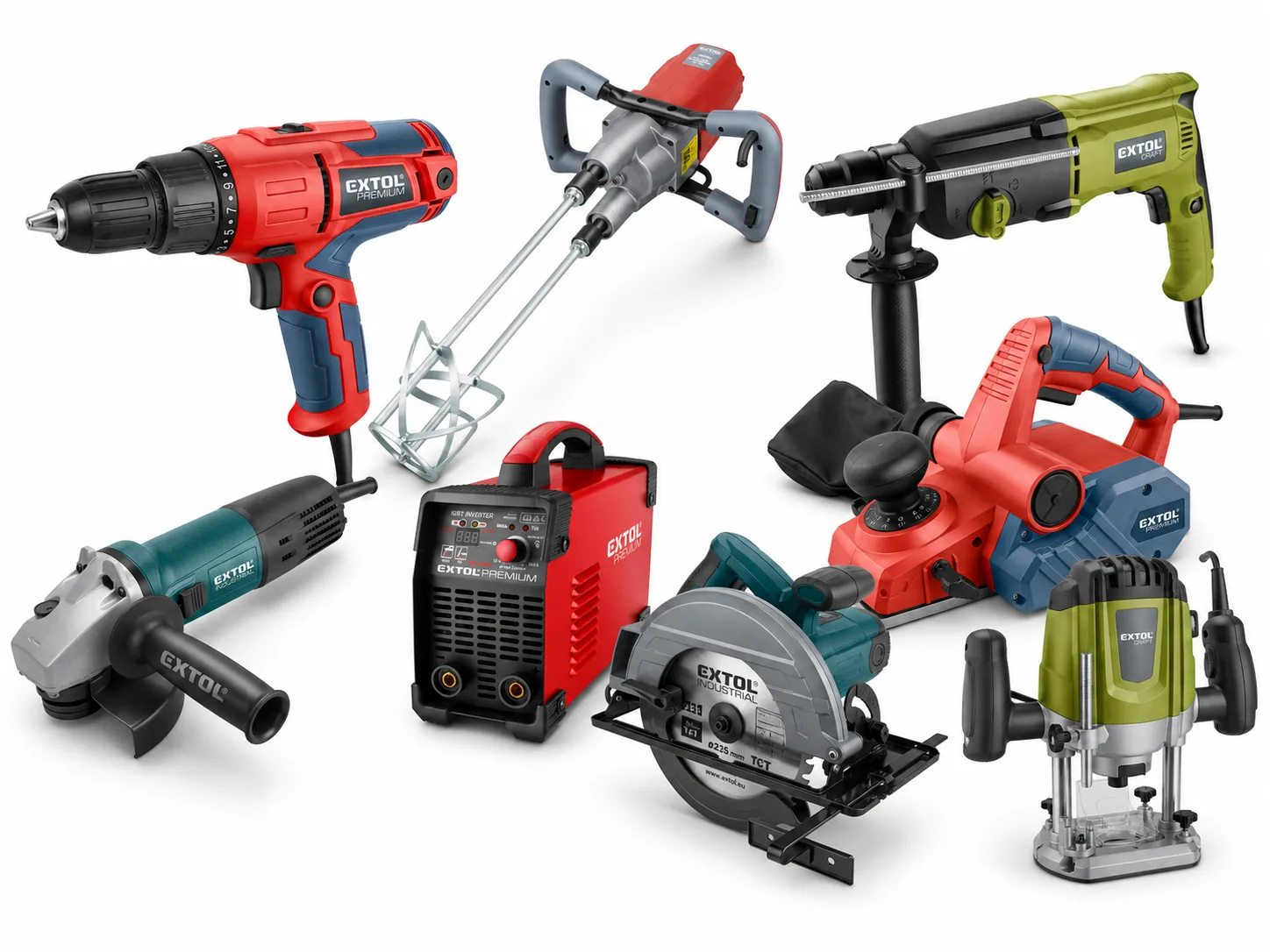
- For mature, high-volume product categories — cordless drills, angle grinders, rotary hammers — the tooling and process investment has already been recovered many times over across the industry
- This is part of why competitive factory-gate pricing is accessible even to buyers placing moderate-sized orders, not just the largest global brands
- A large, established supplier base also means genuine competition on price and terms, rather than a handful of suppliers controlling the market
None of this means every supplier is equally reliable. A concentrated, mature manufacturing base means there’s a wide range of suppliers to choose from — legitimate factories, trading companies, and everything in between — and the outcome of an import order depends far more on how that supplier is selected, verified, and managed than on the fact that the product came from China at all. The rest of this guide covers that process step by step.
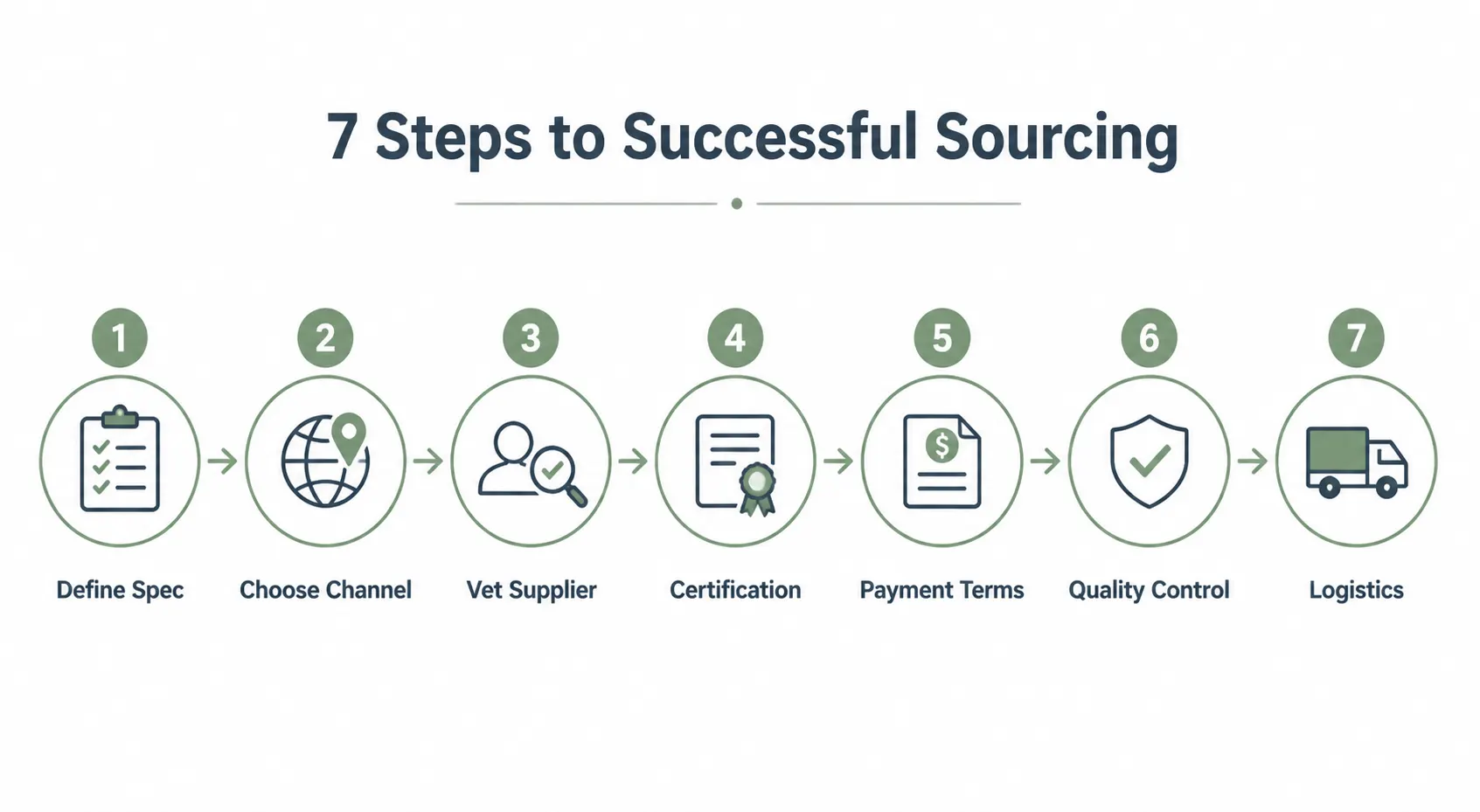
Step 1: Define the Spec and Target Market Before Contacting Anyone
Why this matters: “I want power tools” isn’t something a factory can quote against, and vague specs are the single biggest cause of quotes coming back wrong, too high, or missing requirements entirely. A factory will quote what you describe — if the description is incomplete, so is the quote.
What to define before your first message to a supplier:
- The exact product — power rating, key features, target price point
- Target market — the US, EU, UK, and other regions have different certification marks and voltage standards, and this affects both the quote and which models a factory can even offer
- Order volume — this determines which suppliers are worth talking to, since MOQ varies significantly by factory size and product complexity
- Branding needs — whether this is a standard catalog order or requires custom branding, which changes both MOQ and lead time
Settling this upfront avoids the common back-and-forth where a factory quotes a product, then has to re-quote once it turns out the destination market needs a different certification or voltage spec.
Step 2: Choose a Sourcing Channel
Why this matters: Different channels surface different types of suppliers, and the right channel depends on how much verification work you’re prepared to do yourself.
B2B platforms (Alibaba, Made-in-China, Global Sources) offer the widest selection and built-in tools like trade assurance, but listings mix genuine factories with trading companies, so the platform alone doesn’t verify legitimacy — that’s still your job.
Trade shows (Canton Fair, China International Hardware Show) let you meet suppliers and inspect sample products in person before committing to anything, which is harder to fake than an online listing.
Direct outreach to a manufacturer whose existing product range already matches what you need skips the platform layer entirely, and often gets you talking to the factory’s export team directly rather than an intermediary.
A shortlist of 3–5 suppliers is usually enough to compare meaningfully. Casting a wider net mostly adds negotiation overhead without improving the outcome.
Step 3: Vet the Supplier Before Committing to Anything
Why this matters: This is the step most commonly skipped under time pressure, and the one most responsible for bad outcomes later — a supplier that can’t be verified now can’t be held accountable later, either.
Verify the business license. A legitimate manufacturer can be checked against China’s National Enterprise Credit Information Publicity System, which shows registration status, business scope, and whether the company is in good standing. This takes a few minutes and rules out shell companies immediately.
Confirm whether it’s a factory or a trading company. Both can be legitimate, but the distinction affects pricing (a trading company adds a margin), customization flexibility, and how directly quality issues get resolved if something goes wrong. Ask directly, and ask for factory photos or a video call from the production floor if the answer is unclear.
Order a sample before any bulk commitment. Photos are taken by the party trying to win your order — a sample reveals actual build quality, packaging, and finish in a way no listing can. This applies even to suppliers who look well-established online.
Step 4: Confirm Certification and Compliance for Your Market
Why this matters: Getting this wrong doesn’t just mean a support call later — it can mean a shipment seized at customs, with the cost of the goods, freight, and storage all lost at once.
What’s typically required: Power tools generally need a certification mark specific to the destination market — CE for the EU, UL or ETL for the US, and other region-specific marks elsewhere. Request the actual test report tied to the exact model being ordered. Certification doesn’t automatically transfer between product variants, even ones that look nearly identical — a “similar model” test report isn’t valid for your specific SKU.
A separate but related risk: design infringement. Importing a product that closely resembles a major brand’s patented design or trade dress can trigger a customs seizure or legal dispute, independent of where it was manufactured or how well it was made. This is worth confirming explicitly with the supplier, particularly for categories with well-known branded designs.
Step 5: Agree on Payment Terms — and Understand Why the Structure Matters
Why this matters: Payment terms aren’t just an accounting detail. They determine how much leverage you have if something goes wrong, and getting the structure wrong is how buyers end up funding a bad shipment before they find out it’s bad.
The standard structure in China sourcing is a 30% deposit before production starts, with the remaining 70% paid before shipment. This is a starting point, not a fixed rule — it’s negotiable over time as trust builds with a repeat supplier.
The part that actually protects you: the 70% balance should be tied to something observable and verified — specifically, a passed quality inspection — not simply released once the factory says the goods are “ready.” Pay the balance before inspecting, and a failed inspection report is just bad news you’ve already funded, with little leverage left to demand a fix.
A basic red flag to check every time: wire funds only to a bank account whose name matches the company name on the contract and invoice. A mismatch is a reason to stop and investigate before sending anything.
Step 6: Set Up Quality Control the Way Professional Importers Do
Why this matters: You can’t inspect every unit in a large shipment, and you don’t need to — statistical sampling gives high confidence at a fraction of the cost of a full inspection, provided it’s set up correctly.
AQL (Acceptable Quality Limit) is the standard framework, based on ISO 2859-1 and its US equivalent, ANSI/ASQ Z1.4. It defines how many units get sampled from a lot, and how many defects are acceptable before the batch is rejected. A workable baseline for a tool importer:
| Defect type | Typical AQL threshold |
|---|---|
| Critical (safety-related) | 0% — zero tolerance, no exceptions |
| Major (affects function) | 2.5 |
| Minor (cosmetic) | 4.0 |
For a first order with a new factory or a new product, tightening to Inspection Level III or AQL 1.5 for major defects is common practice, loosening back to standard levels once a supplier has a track record of passed inspections.
Timing is the part that actually matters. Book the inspection after production is complete but before releasing the balance payment — this is the same leverage point covered in payment terms above. A third-party inspection service typically costs somewhere in the range of $200–400 per booking, which is a small cost relative to the risk of accepting a defective shipment sight-unseen.
Step 7: Plan Logistics Before the Goods Are Ready to Ship
Why this matters: Logistics planned after production is finished tends to be more expensive and slower than logistics planned in parallel with it.
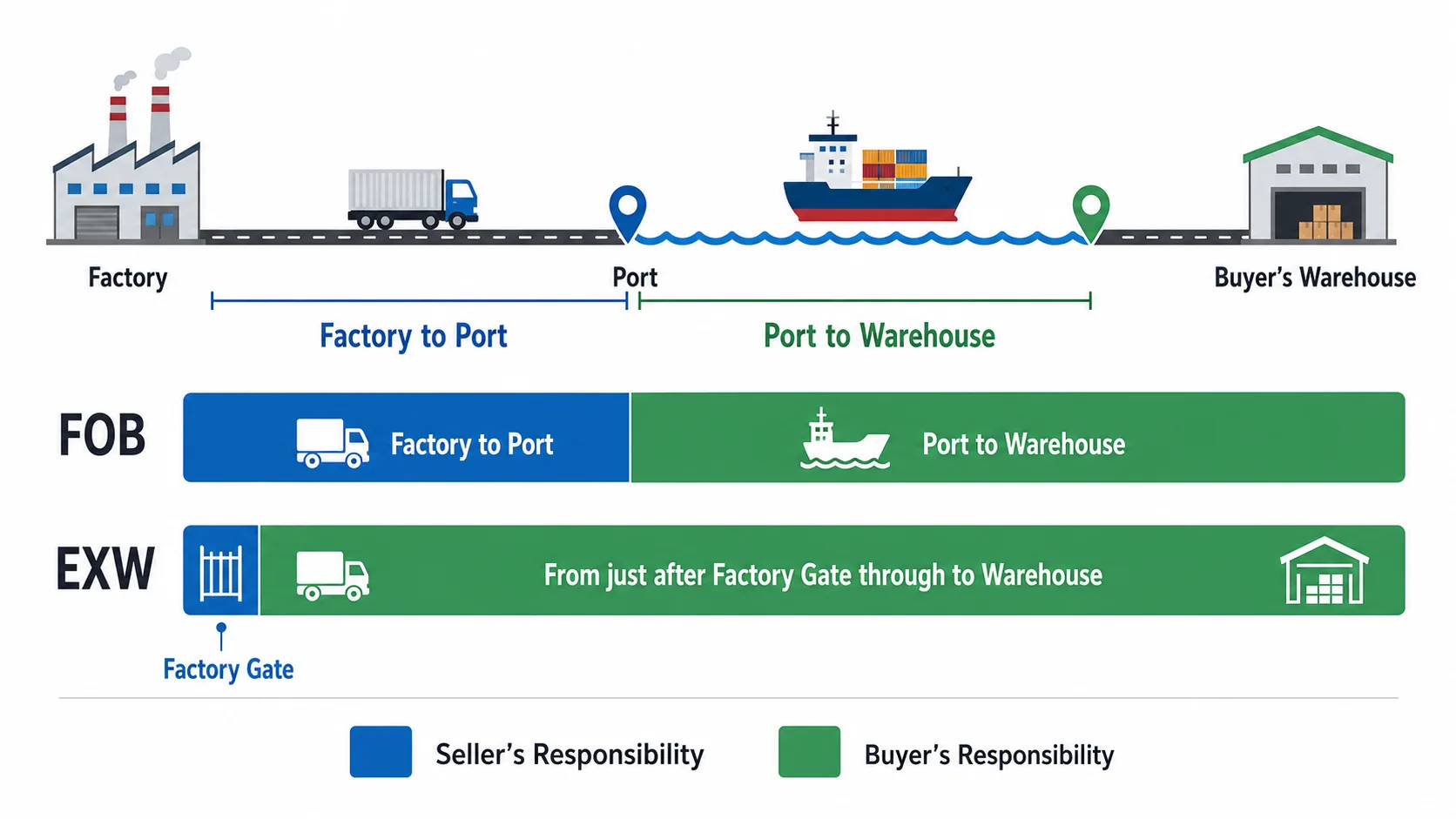
Confirm which Incoterm applies — FOB (the factory handles export clearance, you arrange shipping from the port) or EXW (you handle everything starting from the factory gate) are both common, and the difference significantly affects total landed cost and who’s responsible if something goes wrong at each stage. Confirm container loading capacity and expected lead time in writing, since both affect how far in advance the next order needs to be placed to avoid a supply gap.
Common Mistakes That Cause the Most Damage
- Skipping certification to save time, then having a shipment held or rejected at customs — the cost of the delay usually exceeds whatever time was saved
- Paying the balance before inspection, which removes essentially all leverage if the goods turn out defective
- Accepting “similar model” test reports instead of certification tied to the exact SKU being shipped
- Wiring payment to an account that doesn’t match the contracted company name, without stopping to investigate why
- Treating a supplier’s reluctance to share a business license as a minor inconvenience rather than what it usually is — a warning sign
FAQ
Is a 30% deposit non-negotiable?
No — it’s the common starting point, not a fixed rule. Order volume, order history with a supplier, and overall relationship strength all shift how much negotiating room exists, especially on repeat orders with a supplier that has a track record.
Do I need a professional inspector, or can I trust the factory’s own quality check?
An independent third-party inspection removes the built-in conflict of interest in a factory inspecting its own work before being paid for it. For a first order or a new SKU, this is worth the cost even if it feels like an extra step.
Can I get my own branding on the tools (private label)?
Many manufacturers support OEM or private-label production, covering custom branding, packaging, and sometimes spec adjustments — but MOQ for custom branding is typically higher than for standard catalog orders. Confirm this directly with the manufacturer rather than assuming it’s automatically included.
Sourcing From EXTOL
EXTOL is a power tool manufacturer supplying wholesalers, distributors, and retailers worldwide, with a catalog spanning cordless and corded tools, pneumatic equipment, and specialized categories like planers, routers, and garden power tools. Our products are manufactured to EU-standard quality control, with CE certification available across select product lines — so distributors sourcing for the EU market can work directly with a supplier already familiar with those requirements.