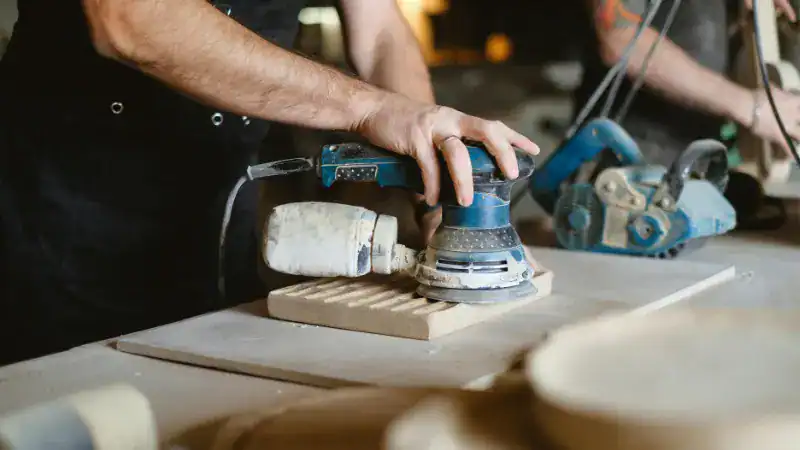
There are various types of power sanders, and each is designed for a different job. Knowing which one to reach for can save you hours of work and deliver a far better finish.
This guide breaks down different types of sanders into three practical categories: sanders built for heavy material removal, sanders designed for fine finishing, and specialty sanders for unique tasks.
Heavy-Duty Sanders: When You Need to Remove Material Fast
Belt Sander
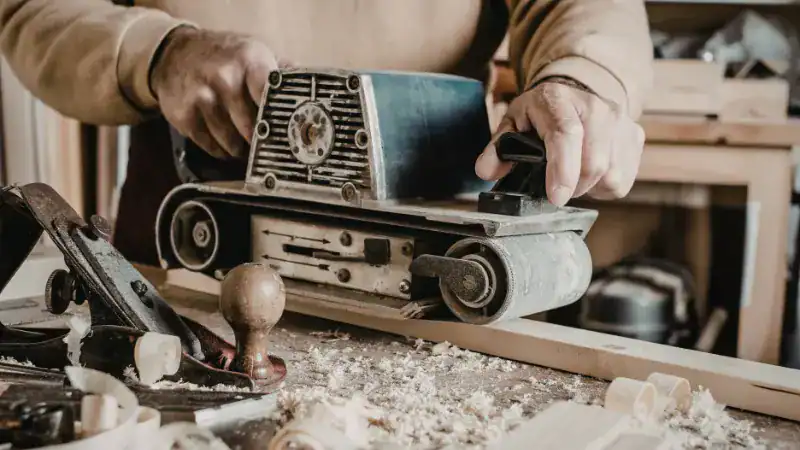
The belt sander is the workhorse of the sanding world. It uses a continuous loop of sandpaper stretched over two rotating drums, moving in a straight line at high speed. This makes it incredibly efficient at stripping paint, leveling rough lumber, and shaping edges. Because of its aggressive cutting action, a belt sander is best suited for the early stages of a project — think rough stock removal rather than final finishing. It does require a steady hand; if you hold it in one spot too long, it will dig into the wood and leave an uneven surface.
Drum Sander
A drum sander takes the concept of the belt sander and scales it up for larger, flatter workpieces. It features a rotating cylindrical drum wrapped in sandpaper, and the workpiece is fed through the machine on a conveyor belt. Drum sanders excel at thicknessing boards and ensuring a perfectly uniform surface across wide panels. They are a staple in serious woodworking shops where consistency matters — for example, when you need a dozen tabletop panels sanded to exactly the same thickness. They’re large, stationary machines, so they’re not something you’d use for small touch-ups.
Floor Sander
Floor sanders are essentially industrial-grade belt or drum sanders built specifically for refinishing hardwood floors. They come in two main forms: a large drum-style machine for the main floor area and an edger for getting close to walls and corners. If you’ve ever refinished a floor, you know these machines are heavy, powerful, and a bit intimidating — but they can strip decades of old finish down to bare wood in a single pass. Most people rent them rather than buy, since floor refinishing is an occasional project rather than a daily task.
Finishing Sanders: Smooth Results, Fine Control
Orbital Sander (Sheet Sander)
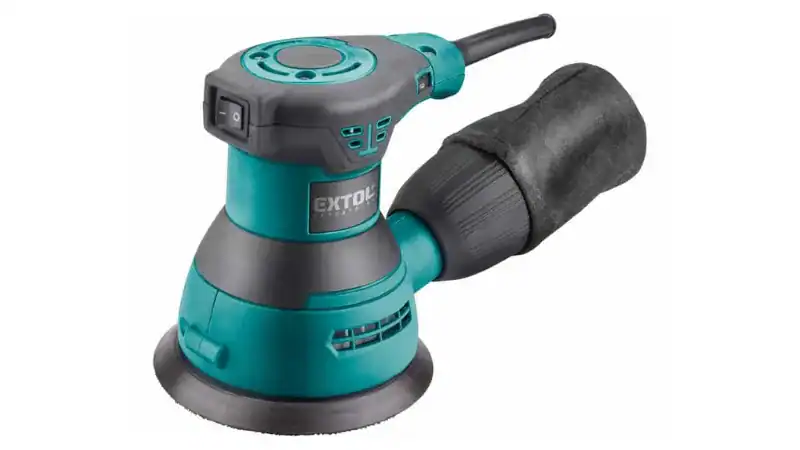
The orbital sander — also commonly called a sheet sander — moves its sanding pad in small, tight circles (orbits). It accepts standard sheets of sandpaper, often a quarter or half sheet, which makes abrasive changes cheap and easy. Orbital sanders are gentle enough for finish work and simple enough for beginners. They won’t remove material as fast as a belt sander, but that’s exactly the point: they give you control. They’re a great all-around choice for furniture, shelving, and general surface prep before painting or staining.
Random Orbital Sander
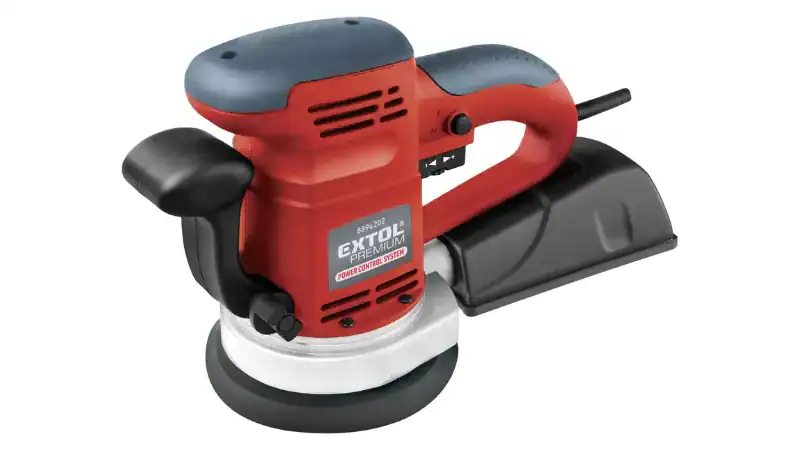
The random orbital sander is arguably the most popular sander among both hobbyists and professionals, and for good reason. It combines two motions — spinning and orbiting — simultaneously. This dual-action pattern means the sanding scratches never follow a repeating path, which virtually eliminates the swirl marks that a standard orbital sander can sometimes leave behind. Random orbital sanders use round, hook-and-loop (Velcro) sanding discs that swap out in seconds. They strike an ideal balance between material removal and surface quality, making them suitable for everything from initial smoothing to final finishing.
Palm Sander
A palm sander is a compact, lightweight finishing sander designed to be held comfortably in one hand. The term is sometimes used interchangeably with small orbital or random orbital sanders, but it generally refers to any small-format sander you can operate with a single palm grip. Palm sanders are perfect for light-duty tasks — smoothing small projects, touching up corners, or sanding between coats of finish. Their low profile and easy maneuverability make them a favorite for detailed furniture work where a larger sander would feel clumsy.
Detail Sander
When you need to sand into tight corners, narrow edges, or intricate profiles, the detail sander is your best friend. It features a small, triangular (pointed) sanding pad that oscillates rapidly, allowing you to reach areas that no other sander can touch — think window frames, stair spindles, or the inside corners of a cabinet. Detail sanders remove material slowly, but precision is their purpose, not speed. They’re an essential companion tool rather than a primary sander.
Specialty Sanders: Purpose-Built for Specific Jobs
Disc Sander
A disc sander is a stationary workshop tool with a flat, circular sanding disc mounted vertically on a table. You press the workpiece against the spinning disc rather than moving the sander over the work. This makes it excellent for squaring up end grain, fine-tuning angles, and shaping small parts with precision. Many woodworkers use a disc sander alongside a belt sander — in fact, combination belt-and-disc sander units are one of the most common benchtop tools in home workshops.
Spindle Sander
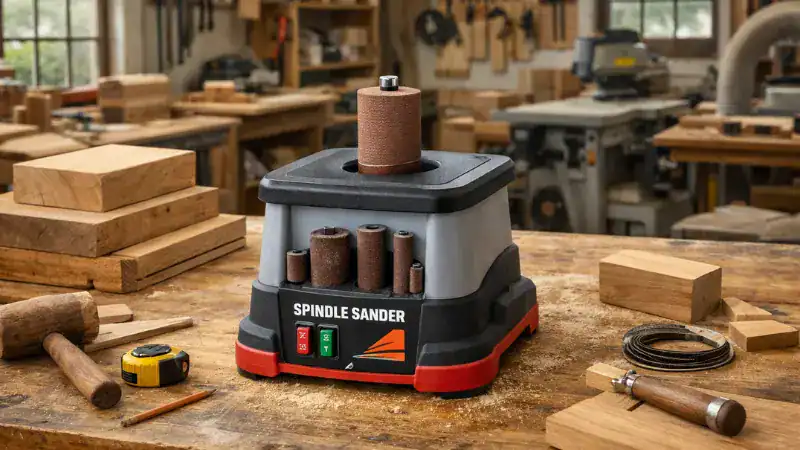
The spindle sander is designed specifically for sanding curves and interior cutouts. It features a vertical, cylindrical drum (the spindle) that protrudes through a flat table surface. The spindle both rotates and oscillates up and down, which prevents heat buildup and ensures even wear on the abrasive sleeve. If you’ve ever tried to sand the inside of a curved cut with a flat sander, you know how frustrating it can be — a spindle sander solves that problem instantly. It’s indispensable for anyone who does a lot of scrollsaw or bandsaw work.
Rotary Sander
Rotary sanders — sometimes called rotary tools with sanding attachments — spin a small abrasive disc or drum at very high RPM. Unlike random orbital sanders, the motion is purely rotational, which makes them aggressive but also harder to control on flat surfaces. They shine in metalworking, auto body repair, rust removal, and other tasks where you need fast, focused material removal on tough surfaces. In woodworking, they’re used sparingly — mostly for heavy shaping or carving work where finesse matters less than power.
So, Which Sander Do You Actually Need?
For most people starting out, a random orbital sander is the single best investment. It handles 80% of typical sanding tasks with ease. Add a detail sander for tight spots and a belt sander for heavy removal, and you’ll have a setup that covers almost any project.
Beyond that, specialty tools like the spindle sander or drum sander become worthwhile once your projects demand them. The key is to match the tool to the task — no single sander does everything well, but the right sander makes every job easier.