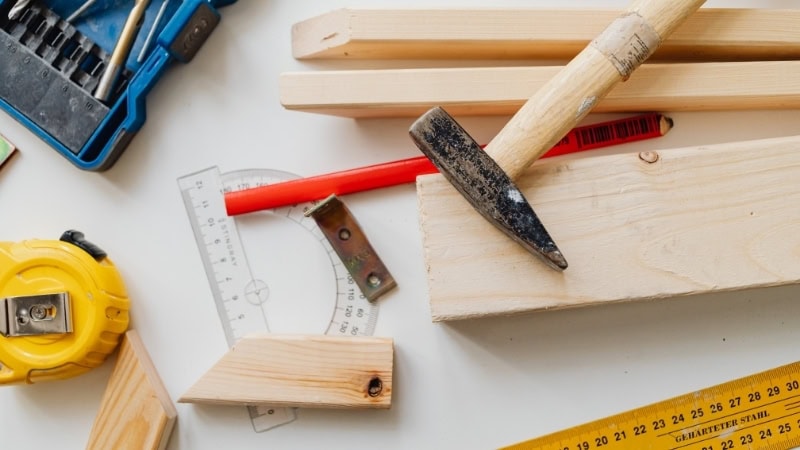
Walk onto any construction site and the range of tools in use spans from a simple tape measure to a rotary hammer breaking through concrete, and from a pair of work gloves to a full compressor setup. No single worker uses all of them, but knowing what’s out there — and what each one is actually for, and where people get it wrong — makes it easier to figure out what belongs in your own kit, or what a crew needs to stock. This list is organized the way tools actually get used on site: measuring first, then cutting, then drilling and fastening, then the heavier demolition and material handling work, with safety equipment covered at the end.
Measuring and Layout Tools
Every experienced tradesperson has a version of the same warning: a mistake at the measuring stage doesn’t stay small. It gets built into every cut, every panel, every fixture that follows, and by the time it’s noticed, it’s usually attached to something.
| Tool | What It’s For | Practical Note |
|---|---|---|
| Tape measure | Rough and precise measurements alike | A bent or kinked hook end throws off every measurement — check it periodically rather than trusting it blindly |
| Spirit level | Checking a surface or line is truly horizontal or vertical | Cheap levels drift out of true faster than expected, especially after being dropped a few times |
| Speed square | Marking angles and straight cuts | Combines a protractor, ruler, and straight edge — faster than switching between three separate tools |
| Framing square | Squaring larger structural elements | More rigid than a speed square, used where a smaller tool would flex under pressure |
| Chalk line | Snapping a long, straight reference line | Marks a full-length line in seconds — far faster than measuring and marking multiple points by hand |
| Laser level | Projecting a level or plumb reference over distance | Worth the extra cost once a job spans more than a single room or wall |
| Plumb bob | Establishing a single vertical reference point | Still faster than a laser for one quick point, which is why it hasn’t disappeared from site kits |
| Carpenter’s pencil | Marking rough-sawn lumber | The flat shape resists rolling and stays visible where a normal pencil line disappears |
Cutting and Shaping Tools
Cutting tools are where the trade-off between speed and control shows up most clearly — picking the wrong one for the material usually means either a rough cut that needs rework, or a tool that struggles and slows the job down.
| Tool | What It’s For | Practical Note |
|---|---|---|
| Saws | Circular saws for straight cuts, reciprocating saws for rough or demolition cuts | Using the wrong one for the job is a common source of frustration for less experienced workers |
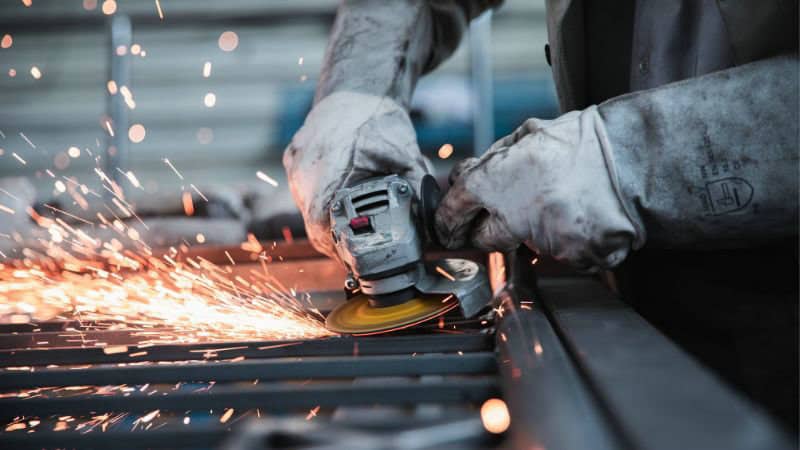
| Grinders | Cutting, grinding, and surface finishing on metal and masonry | Versatile by swapping discs, but the wrong disc for the material burns through it or leaves a poor finish |
| Snips | Cutting sheet metal cleanly | Gives a cleaner edge than a grinder in less time — matters where the cut edge stays visible |
| Routers / planers | Edge profiling, joinery, and smoothing wood surfaces | More common on finish carpentry than rough framing — not for removing large amounts of material |
| Hand saw | Manual cuts in tight spaces | Slower than a power saw, but works where a power tool can’t fit or a cord isn’t practical |
| Chisels | Detail work in wood, breaking away small masonry sections | A sharp chisel does cleaner work with less force than a dull one |
| Utility knife | General-purpose cutting — insulation, packaging, drywall, trim | The blade dulls faster than expected; most cutting injuries happen with a dull blade, not a sharp one |
| Bolt cutter | Cutting rebar, chain, and heavy wire | Leverage does the work — a longer handle cuts thicker material with less effort |
Drilling and Fastening Tools
This is where the bulk of assembly work happens, and where the gap between a tool that’s “powerful enough” and one that’s the right fit shows up fastest — under load, on a real fastener.
| Tool | What It’s For | Practical Note |
|---|---|---|
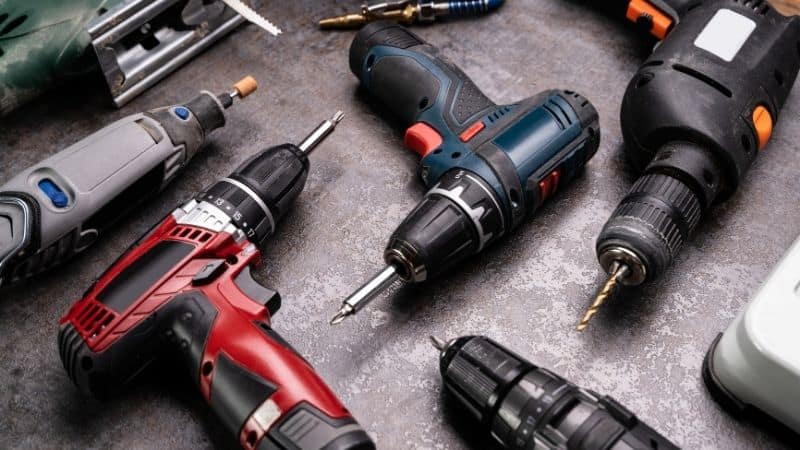
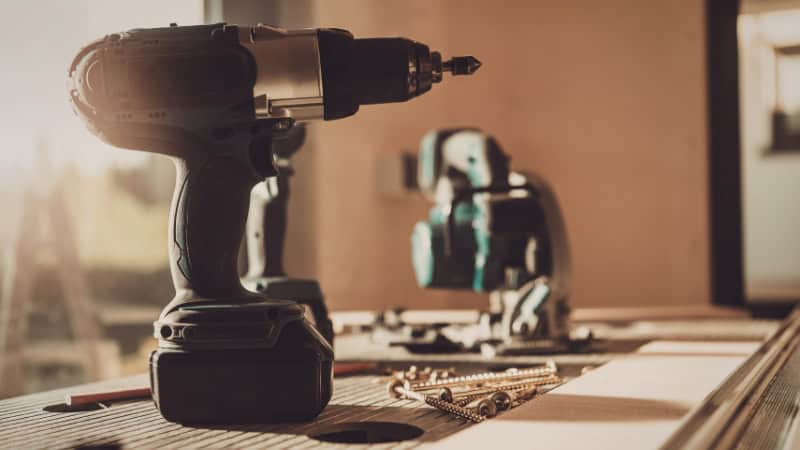
| Drills | Drilling holes and driving screws in wood, metal, and masonry | A standard drill bogs down fast in masonry — that’s where a hammer drill setting earns its keep |
| Screwdrivers | Repeated fastening at speed | Saving a few seconds per screw adds up fast across a hundred fasteners |
| Cordless tools | Work away from a fixed power source | The real trade-off today is battery management, not raw power — keep a charged spare on hand |
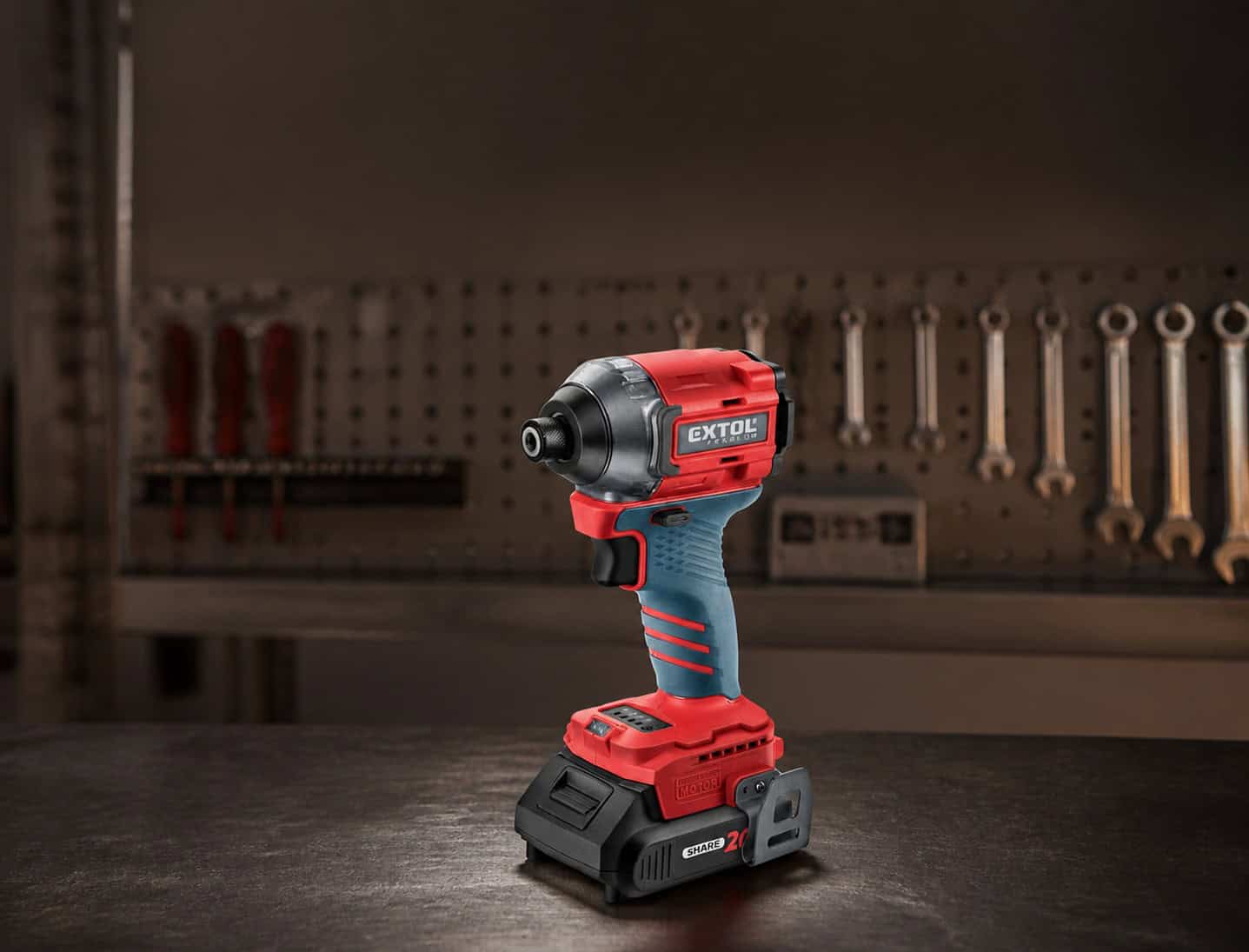
| Impact wrenches | High-torque fastening and loosening of nuts and bolts | The difference is obvious the first time someone tries to remove a rusted bolt with the wrong tool |
| Nail gun | Fast, repeated nailing for framing and finish work | Dramatically faster than a hand hammer, and the tool most safety briefings spend the most time on |
| Rivet gun | Fastening sheet material where a screw or weld isn’t practical | Common in ductwork and light metal fabrication |
| Wrench set | Manual fastening where precision matters more than speed | Most workers end up carrying a curated subset of sizes, not the whole set |
| Socket set / ratchets | Precision bolt tightening, often to a torque spec | “Close enough” isn’t close enough on structural or safety-critical fasteners |
| Pliers | Gripping, bending, and cutting wire and small fasteners | Often used slightly outside their intended purpose, which shortens their working life |
| Claw hammer | Nailing and minor demolition | Still the most-reached-for hand tool on most sites despite decades of power tool development |
Demolition and Heavy-Duty Tools
Demolition work looks like it rewards raw force, but the more experienced approach is usually about controlling where that force goes.
| Tool | What It’s For | Practical Note |
|---|---|---|
| Hammers | Rotary and demolition hammers for masonry breaking | The SDS-style chuck changes bits faster than a standard drill chuck — useful when switching tasks |
| Pry bar / crowbar | Prying apart material, pulling nails | The right length and angle does the job with far less effort than forcing the wrong shape |
| Sledgehammer | High-impact demolition where precision isn’t the priority | Letting the head’s weight do the work is more effective and less exhausting than muscling every swing |
| Digging bar | Breaking compacted ground or stubborn obstructions | Often the tool that gets grabbed after a shovel has already failed |
Material Handling and Lifting
Getting material to where it’s actually needed is its own skill, and a bit of planning saves far more time than it costs.
| Tool | What It’s For | Practical Note |
|---|---|---|
| Wheelbarrow | Moving concrete, debris, or bulk material short distances | Loading it evenly and not overfilling it prevents a tipped load halfway across the site |
| Hand truck / dolly | Transporting boxed or palletized material | Considerably easier on the back over a full day of repeated trips than carrying by hand |
| Sawhorses | A stable, portable base for cutting and holding material | Cutting on the ground instead is harder on the back and less accurate |
| Come-along / pulley system | Moving or positioning heavy material without powered lifting equipment | Useful exactly where bringing in a crane or hoist isn’t practical for the scale of the job |
Site Support Tools
A handful of tools don’t fit neatly into “cutting” or “fastening” but show up constantly in the background of day-to-day site work.
| Tool | What It’s For | Practical Note |
|---|---|---|
| Mixers | Preparing mortar, plaster, and adhesive | Consistency matters more than speed — an unevenly mixed batch causes problems that show up after it’s applied |
| Compressors | Supplying air power to pneumatic tools | Undersizing a compressor for the tools it needs to run is a common and frustrating mistake |
| Vacuum cleaners | Job site cleanup and dust control | Dust control during cutting and grinding has become standard practice on many sites, not an afterthought |
| Welding units / plastic pipe welding | Metal fabrication and plumbing installation | Results depend as much on technique and practice as on the equipment itself |
| Tool belt / tool organizer | Keeping frequently used tools within reach | The time lost walking back to a toolbox adds up fast across a full day |
Safety Equipment
Every tool above assumes the person using it is protected. On most professional sites, safety gear isn’t treated as separate from the tool kit — it’s simply part of it.
| Item | What It’s For | Practical Note |
|---|---|---|
| Hard hat | Protection from falling debris and overhead hazards | Needs replacing after any real impact — the protective foam doesn’t recover the way the shell’s appearance suggests |
| Safety glasses | Eye protection during cutting, grinding, and drilling | The most-skipped item by inexperienced workers, and the one experienced tradespeople insist on without exception |
| Work gloves | Hand protection during material handling and tool use | Different jobs call for different gloves — heavy leather is the wrong choice for fine fastening work |
| Hearing protection | Protection from cumulative noise exposure | The real risk is cumulative exposure over years, not any single loud task |
| Steel-toe boots | Foot protection from dropped material and punctures | A common enough risk on an active site that it’s not hypothetical |
| High-visibility vest | Visibility around moving equipment and vehicles | Especially important wherever powered equipment shares space with workers on foot |
What should you check before you buy
A list like the one above can make it look like every worker needs every tool on it. In practice, the tools that actually matter depend heavily on the trade, and treating this as a shopping list to complete rather than a reference to draw from is a common way to end up with a toolbox full of things that rarely get used.
Choose Tools Based on Your Specific Trade
A framer’s daily kit looks different from an electrician’s, which looks different again from a finish carpenter’s. Someone doing rough framing reaches for a circular saw and a nail gun constantly and rarely touches a router; someone doing trim and cabinetry work is the reverse. Building a kit around the specific trade — rather than trying to cover every category in this list equally — avoids paying for capability that never gets used.
Spend More on the Tools You Use Every Day
The tools reached for constantly are worth the better-quality option; the tools used once a month are usually not. A drill or an impact driver used dozens of times a day justifies spending more for reliability and comfort. A specialty tool used a handful of times a year rarely does — and the money saved there is often better spent upgrading the tools actually doing the daily work.
Cordless vs Corded: What to Actually Consider
Cordless tools have closed most of the performance gap with corded equivalents, but battery management is a real, ongoing cost — in charging time, in carrying spares, and in the tool being useless the moment a battery runs flat mid-task. For tools used constantly through a full shift, this trade-off is worth thinking through rather than defaulting to cordless because it’s the more common choice today.
Budget for Safety Gear First, Not Last
It’s tempting to spend the bulk of a tool budget on power tools and treat safety gear as whatever’s left over. Experienced crews tend to do the opposite — safety equipment gets bought first, not last, precisely because it’s the category most likely to get skipped once the budget runs tight.
Build Your Tool Kit Over Time, Not All at Once
Buying everything on a list like this at once is expensive and usually unnecessary. Most experienced tradespeople build their kit over months or years, adding tools as specific jobs demand them — which also means each purchase is tested against real, immediate need rather than a guess about what might eventually be useful.
FAQ
What Tools Does Every Construction Worker Need to Start?
A tape measure, a level, a claw hammer, a drill/driver, and a utility knife cover a large share of day-to-day tasks across most trades — most workers build out from there based on their specific role on site.
Are Hand Tools or Power Tools More Important on a Construction Site?
Neither replaces the other. Hand tools handle precision, tight spaces, and situations without power access; power tools handle speed and volume on repetitive tasks. Most experienced workers keep both within reach and choose based on the specific task.
What’s the Difference Between Construction Tools and Construction Equipment?
Tools are generally hand-held or portable items operated by an individual worker — drills, saws, hammers. Equipment refers to larger, often motorized machinery — excavators, cranes, concrete mixers — usually operated by a dedicated operator rather than carried from task to task.
Is Safety Gear Considered Part of a Construction Tool Kit?
Yes — on most professional sites it’s treated as standard equipment, not an optional add-on. A hard hat and safety glasses are as much a part of a worker’s daily kit as a hammer or drill.
How Should a New Construction Worker Build Up a Tool Kit?
Start with core measuring and hand tools plus basic safety gear, then add power tools as the type of work — and budget — demands, rather than buying everything up front.
Stocking a Construction Tool Range
Whether it’s measuring, cutting, drilling, or demolition equipment, having the right tool for each stage of a job — not just a powerful one — is what keeps a site moving efficiently.
Browse EXTOL’s power tools range, or request a wholesale quote to talk through which tools fit your product line.