An electric planer looks like a simple tool, but choosing the right one saves real time and money down the line. This guide covers what an electric planer is, the main types available, where each one is typically used, and what to check before you buy.
What Is an Electric Planer?
An electric planer shaves thin layers off a wood surface to smooth, level, or resize it. It does the same basic job as a traditional hand plane, except the cutting is driven by a motor instead of hand pressure.
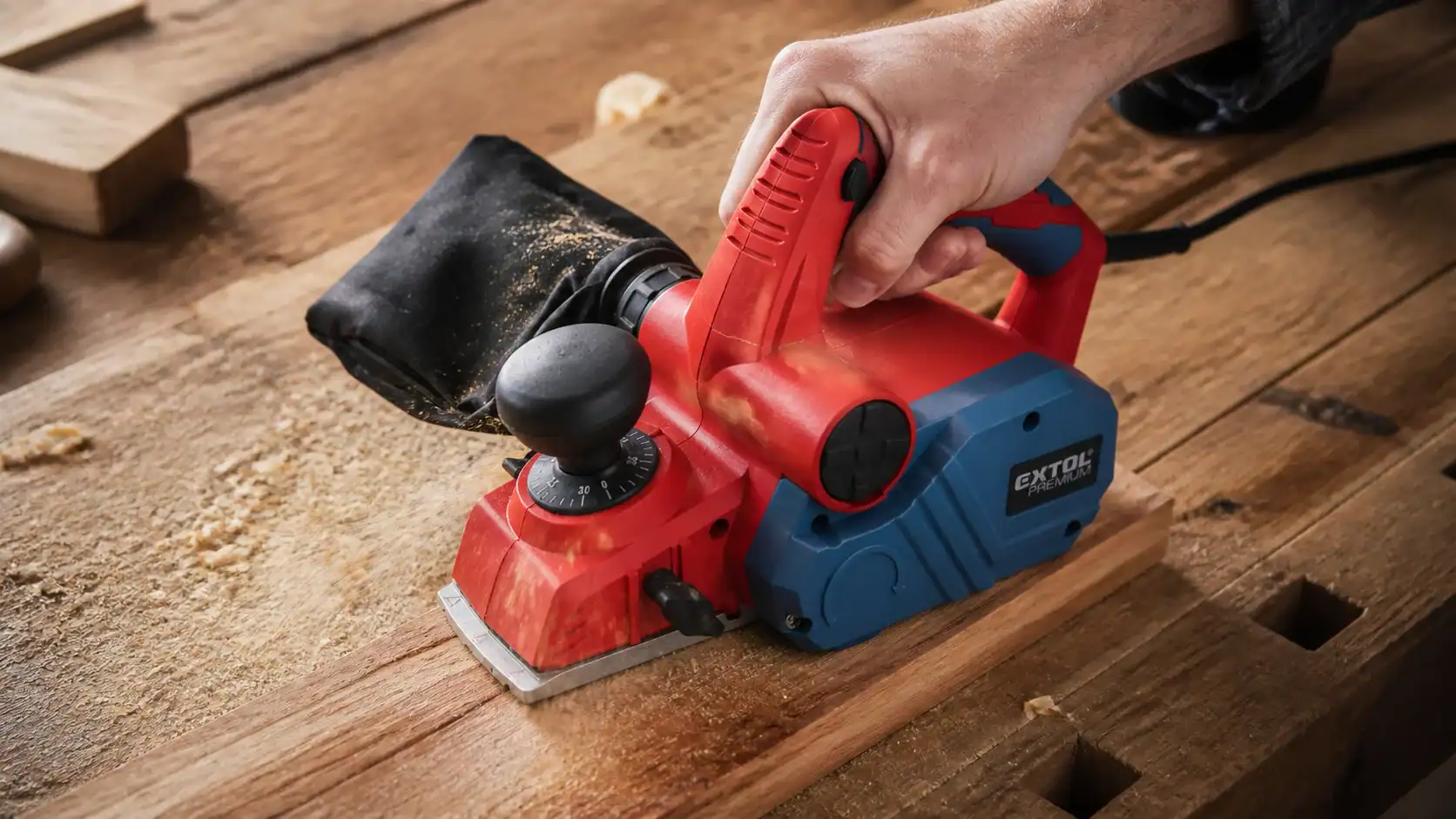
Inside the tool, a cutter head fitted with two or more blades spins at high speed, usually between 15,000 and 20,000 RPM. The tool rides across the wood on a flat sole plate, and the depth of cut is adjusted by raising or lowering the front shoe. Most models also include a fence or edge guide, which helps keep each pass straight along an edge.
Types of Electric Planers
1. Type of Power Source
There are two main power types: corded and cordless.
Corded planers connect directly to an electrical outlet, which means the power output stays consistent from the first cut to the last. This makes them the better choice for continuous, heavy-duty work, though the cord can get in the way in tight spaces or when the tool needs to be used at different angles.
Cordless planers run on a rechargeable battery, so there’s no cord to manage and more freedom to move around. The trade-off is that battery-powered models generally deliver less sustained power than an equivalent corded model, and performance drops as the charge runs down. They also tend to cost more for similar specs, since the price includes the battery and the electronics that manage it.
2. Type of Build
Beyond power source, planers also differ by build — handheld or stationary.
Handheld planers are guided by hand across the surface of the wood, similar to a traditional hand plane. They’re built for edge work, chamfering, and general surfacing on boards, doors, and trim that are already in place.
Benchtop and thickness planers are stationary machines. Instead of the tool moving across the wood, the board is fed through rollers and passed under a fixed cutter head, which planes both faces down to a uniform thickness. This is a different job from handheld planing, not a bigger version of it, and it’s the category to look at when boards need to come out at a precise, consistent thickness across a full batch.
3. Type of Blade
Most planers use one of two blade types: standard HSS blades or disposable double-edged blades.
HSS (high-speed steel) blades hold an edge well and can be resharpened, which suits buyers who plan to maintain the same tool over a long service life. Disposable blades are replaced rather than sharpened, which is faster in the short term but adds a recurring cost over time. Neither option is better across the board — it depends on how the tool will be used and how it’ll be maintained.
Where Each Type Is Used
Home repairs and DIY projects
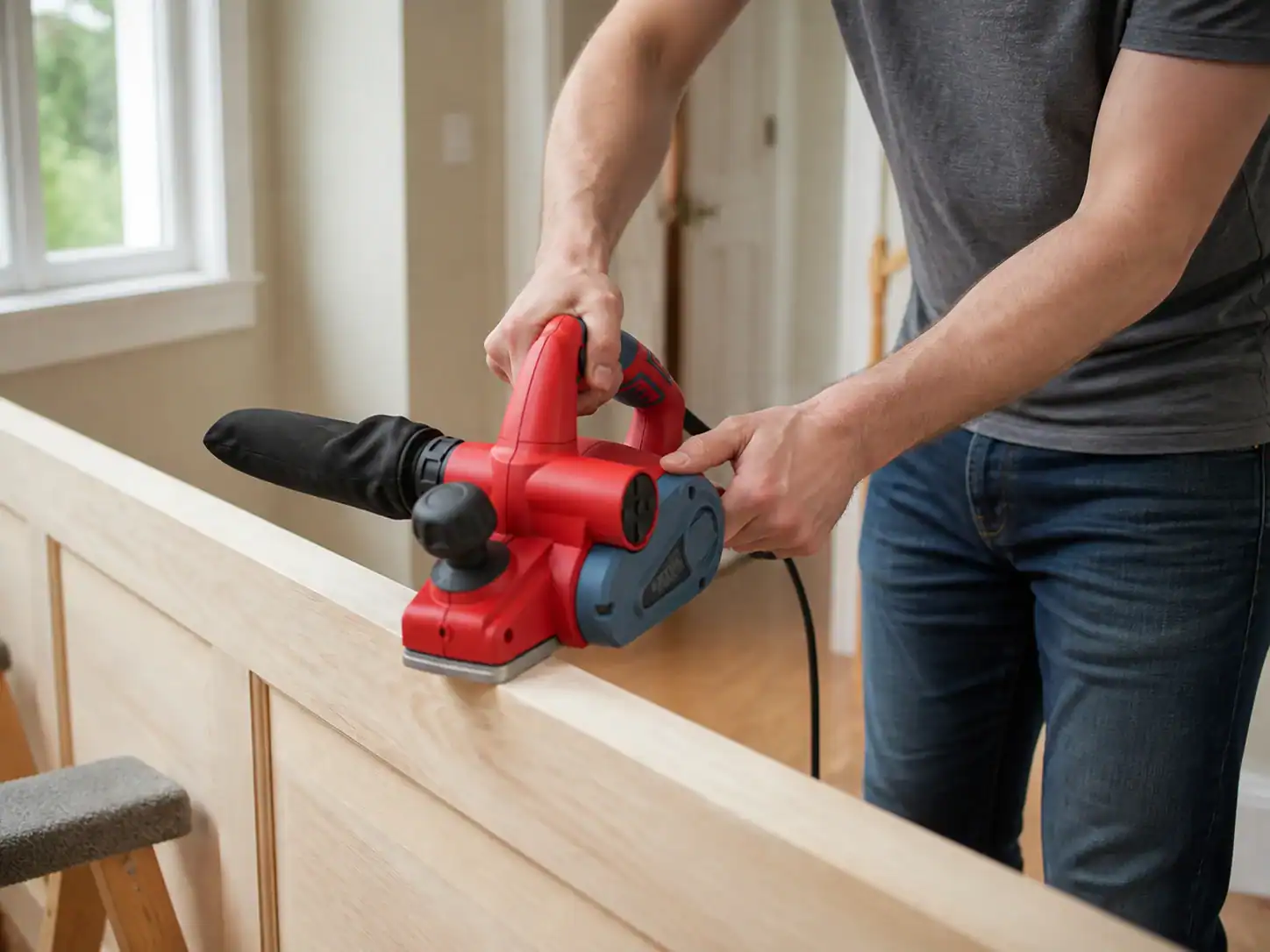
Trimming a door that’s sticking, smoothing a rough board, small fixes around the house. A corded handheld planer covers most of this without any complications.
Recommended model: The Electric Planer 710W fits well here — light at 2.6kg, with a 0–2mm cutting depth suited to fine, controlled adjustments.
Job sites and on-location work
Power access isn’t always reliable, and moving between rooms or areas is common. A cordless handheld planer fits this situation better than a corded one, since there’s no cable to manage and no outlet to hunt for between jobs.
Furniture making and cabinetry. Boards need to come out at a precise, consistent thickness across the batch. This calls for a benchtop or thickness planer — a handheld planer simply isn’t built for this kind of dimensioning work, regardless of power or blade quality.
Framing and construction
Leveling lumber, chamfering handrails and posts, general edge-smoothing on rougher, less finished stock. A corded handheld planer with strong motor power and deeper cutting range handles this well.
Recommended model: The Electric Hand Planer 900W is the better fit here — up to 24mm cutting depth and built-in chamfering grooves, made for heavier, repeated material removal.
Production woodworking shops
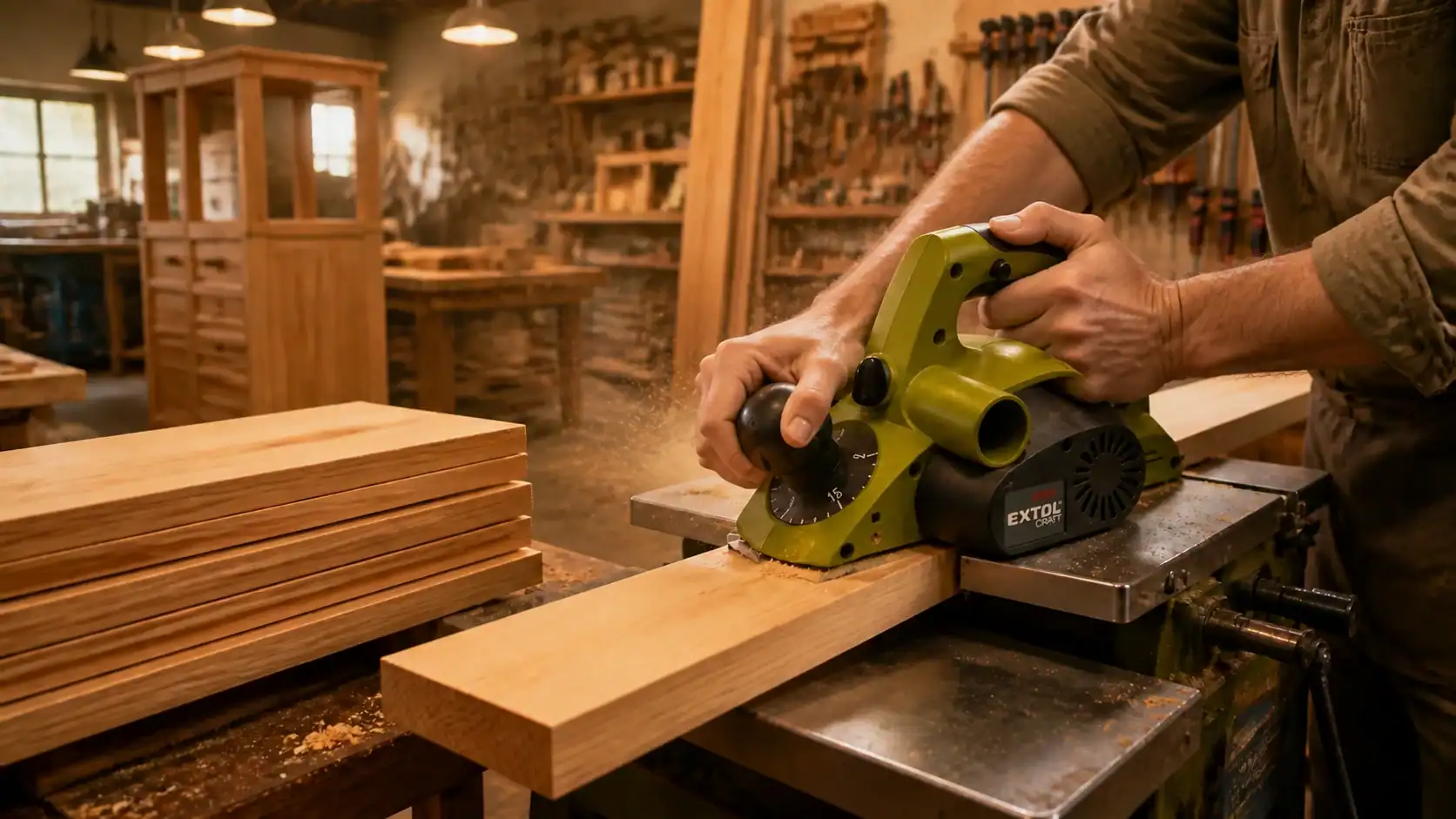
These operations often use a mix of tools — handheld planers for edge work and chamfering, benchtop or thickness planers for dimensioning lumber to size.
Recommended model: The Electric Wood Planer 750W covers the handheld side well — a mid-power, general-purpose option for routine daily surfacing work.
How to Choose
A few specs are worth checking carefully before you buy, whether it’s one tool or a bulk order.
Motor power. Higher wattage generally means the tool holds up better under sustained use, not just on a light, single pass. This matters more once you’re working through a stack of boards rather than a single quick fix.
Planing width. Most general-purpose handheld planers run 80 to 82mm wide, which covers standard boards and door edges. A narrower or wider width may be worth considering depending on the typical size of the material being worked.
Cutting depth range. A wider adjustable range gives more flexibility, from fine finishing passes on one end to aggressive material removal on the other. This is especially relevant for anyone regularly working with rough or uneven stock.
Weight and balance. A lighter tool is easier to control on vertical surfaces or during long sessions, though this is often a trade-off against motor power. It’s worth testing the balance in hand if possible, not just comparing the number on a spec sheet.
Dust extraction. A built-in collection bag or dust port keeps the work area clear, which matters more than it sounds — especially for indoor work or jobs involving repeated passes.
For bulk orders, it also helps to confirm lead time, minimum order quantity, and whether the supplier can support OEM or private-label packaging. These details rarely show up on a spec sheet, but they matter just as much as the technical specs once an order is actually being placed.
EXTOL’s Electric Planer Range
EXTOL is an electric planer manufacturer supplying wholesalers, distributors, and retailers worldwide, as part of a broader catalog that spans both power tools and hand tools for B2B buyers. Within the electric planer line, our corded handheld planers are built around three different balances of power and features, so distributors can match the right spec to their market rather than working with a single one-size-fits-all model.
The Electric Hand Planer 900W is the most powerful of the three, with a cutting depth of up to 24mm and three depth grooves for chamfering. It includes a protective mandrel for the blades, HSS blades for a longer service life, and a dust bag that attaches on either side, and it’s suitable for both right- and left-handed use.
The Electric Planer 710W is the lightest option at 2.6kg, with an 82mm planing width, a 0–2mm cutting depth, and a 0–7mm rabbeting depth for jobs that need a shoulder or rebate cut alongside standard planing.
The Electric Wood Planer 750W sits between the other two, with the same 82mm planing width and a 7mm depth capability.
All three models are manufactured to EU-standard quality control, with CE certification available across select product lines. EXTOL is wholesale only, with no direct-to-consumer sales, so every order is quoted and produced against the buyer’s actual specification rather than pulled from a generic retail catalog.
Browse the full electric planer range, or request a wholesale quote for your next order.